Mon - Sat 7:00 am to 7:00 pm


Mon - Sat 7:00 am to 7:00 pm

Construction porta potty costs are bleeding your project budget dry while workers waste precious time hunting for clean facilities. Most site managers treat portable restrooms as afterthoughts, missing massive opportunities to boost both productivity and profits.
Prime Dumpster’s field-tested strategies reveal how to save money on construction porta potties without compromising crew comfort or safety standards. Our proven methods help contractors slash rental costs by up to 40% while keeping workers focused on building instead of bathroom breaks.
Smart contractors use proven placement and rental strategies to maximize portable restroom value while minimizing unnecessary expenses.
Now let’s explore the detailed strategies that transform porta potty expenses from budget drains into productivity investments.

Job site efficiency hinges on more than just skilled labor – it’s the unseen essentials that make the difference. Restroom planning here isn’t one-size-fits-all. Crews battling high-rise winds need different solutions than road crews in rural areas.
OSHA’s magic number? One unit per seven workers for 40-hour weeks. But real life’s messier. Graveyard shifts or summer heatwaves change the math faster than a dropped wrench. Track peak activity periods like concrete pours – that’s when crews hit restrooms hardest.
Stagger lunch breaks to avoid restroom rushes. Place units near break areas but clear of crane paths. Bonus: Workers spend less time trekking and more time building.
Ontario fines sites without facilities – other regions have quirks too. California demands ADA units from day one. Texas? They’ll check your handwashing stations during summer inspections.
Don’t guess. Call local health departments before breaking ground. Some cities require permits for unit placement. Others mandate weekly servicing schedules. Get it wrong, and you’re not just facing fines – you’re losing crew trust.
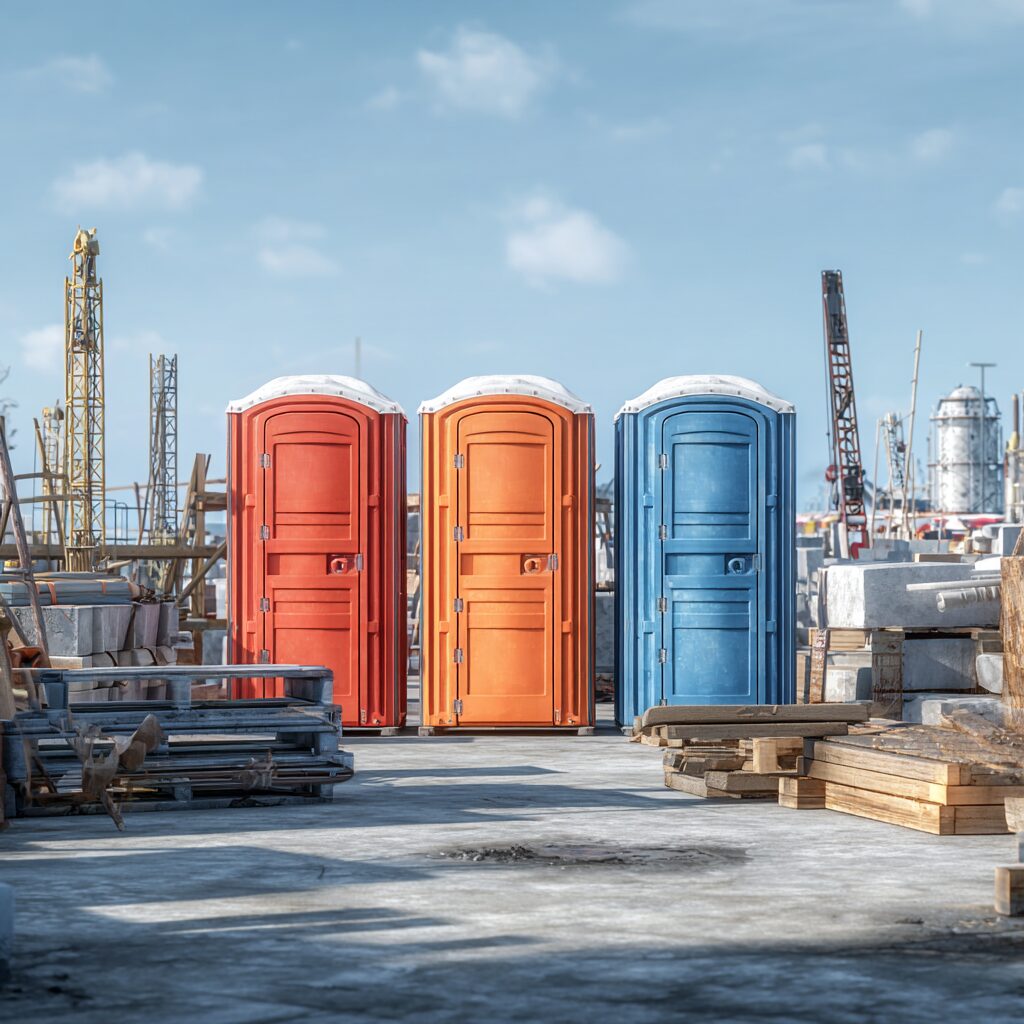
Construction porta potty rentals typically operate on 28-day billing cycles that align with typical project phases and contractor payroll schedules, providing predictable costs throughout each construction stage. This billing structure often includes weekly maintenance visits, supply restocking, and waste removal services, eliminating complex daily rate calculations while ensuring reliable sanitation facilities.
Alternative rental periods like 3-day arrangements can be arranged for specific situations such as short-term inspections or emergency repairs that don’t fit standard construction timelines. Most providers offer flexible scheduling options when projects require non-standard durations, allowing site managers to discuss customized rental periods that match unique project requirements or phase transitions.
Basic units remain the workhorse of job sites for good reason. These no-frills toilets cost around $199-$349 and handle high traffic efficiently. They’re ideal for short-term projects or sites with multiple break areas. Just remember: More units often beat fancier features when managing large crews.
Upgrade to hands-free sinks or flush systems (about $300 to 400) when hygiene becomes critical. Food service sites or medical facility projects benefit most. One project manager reported 23% fewer sick days after switching to deluxe models during flu season. Foot-pedal sinks? Worth every penny when working with messy materials.
Multi-story builds need compact high-rise units that fit elevators. Solar-powered versions slash generator reliance – perfect for remote sites. ADA-compliant models ($200 to $300) aren’t just legal checkboxes. They signal your site values every worker’s comfort.
Towable trailers (up to $1,500/week) shine for projects that relocate frequently, like highway crews chasing mile markers.
Prime Dumpster Pro Tip: Cluster units near existing roads. One highway crew saved 22% by positioning facilities along their paved staging area instead of muddy work zones. Rental companies charge extra for off-road deliveries and retrieval.
Smart contractors use proven strategies to reduce portable restroom costs while maintaining crew productivity and OSHA compliance.
These cost-saving approaches help transform necessary sanitation expenses into strategic workforce investments that boost both productivity and profits.
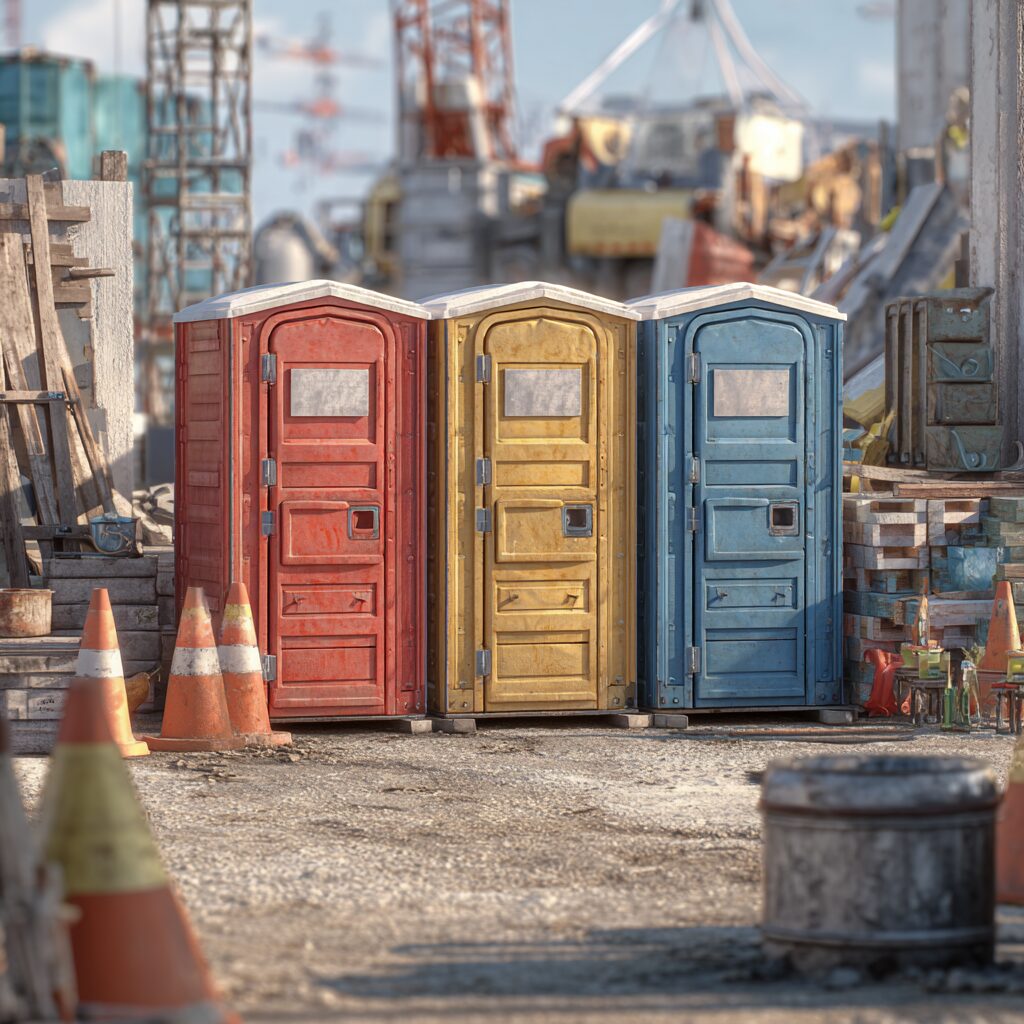
Imagine a delivery truck stuck in fresh concrete – that’s poor planning in action. Positioning temporary facilities requires balancing worker needs with terrain realities. Soil stability, drainage patterns, and equipment traffic all influence where units thrive versus become liabilities.
Service trucks need clear paths. Position restrooms near existing access roads but 50+ feet from active work zones. This prevents odors from bothering crews while letting maintenance vehicles reach units quickly. Rural sites often require gravel pads to prevent sinkage – factor this into prep costs.
Phase changes demand relocation planning. During excavation, cluster units near equipment storage. Shift them closer to rising structures as framing begins. Mark future placement areas with spray paint during site grading to avoid rework.
Calculating restroom needs isn’t rocket science, but getting it wrong can blast your budget. The sweet spot lies in balancing compliance with practicality – too few units create lines, while too many drain funds better spent elsewhere.
OSHA’s baseline of one unit per seven workers works for standard shifts. But construction crews rarely stick to 9-to-5 schedules. Double the workforce during concrete pours? Add temporary units. Running weekend overtime? Adjust your count like a chef seasoning soup.
| Work Hours | Workers Per Unit | Extra Units Needed |
| 40/week | 7 | 0 |
| 50/week | 5 | +2 per 35 workers |
| 60/week | 4 | +3 per 28 workers |
Subcontractors and inspectors count too. A 50-person crew with three visiting electricians needs facilities for 53. Track daily headcounts like attendance sheets – it prevents last-minute scrambles when auditors arrive.
Phase changes demand flexibility. During foundation work with 120 staff, you’ll need 17 units. Trim to 12 when only 84 framers remain. Rental companies often prorate returns – use that when scaling down.
Shared facilities across contractors? Possible, but risky. Coordinate cleaning schedules and accessibility. One high-rise project saved $8,000 monthly by pooling resources with neighboring crews, but only after aligning break times.
Construction crews face unique challenges that demand smarter sanitation strategies. Specialized facilities now offer solutions beyond basic blue boxes, blending functionality with cutting-edge design.
Solar-powered units shine on remote sites without electrical hookups. These self-contained systems reduce servicing needs by 40% through UV sanitation and LED lighting. One wind farm crew cut maintenance visits from weekly to monthly using solar models.
High-rise units transform skyscraper projects. Compact designs fit service elevators, eliminating stairwell treks. A Chicago high-rise team reduced ground-level facilities by 60% by placing restrooms on every fifth floor during steelwork phases.
Towable trailers keep pace with mobile crews. Highway teams report 35% fewer delivery fees when units move with their progress markers. These mobile solutions feature stabilizing jacks for uneven terrain.
Modular systems adapt to shifting crew sizes. Expandable trailers let sites add stalls during peak phases without new rentals. A Texas stadium project scaled from 12 to 28 units during concrete pours, then downsized as work progressed.
While advanced features cost 15-30% more upfront, they often pay off through reduced labor disruptions and maintenance needs. Evaluate project duration and crew preferences before committing to specialized solutions.
Learning how to save money on construction porta potties transforms necessary expenses into strategic workforce investments. Smart placement beats fancy features every time when it comes to keeping crews productive and budgets intact.
Prime Dumpster’s nationwide construction expertise helps site managers optimize portable sanitation costs while maintaining OSHA compliance and crew satisfaction. Contact our team to discover how proper planning and strategic partnerships can turn your next project’s restroom requirements into a competitive advantage that keeps workers happy and timelines on track.
If you are looking for Savings Tips for Long-Term Porta Potty Rentals, Click Here


