Mon - Sat 7:00 am to 7:00 pm


Mon - Sat 7:00 am to 7:00 pm

Managing debris from highway construction, bridge repairs, and road maintenance projects requires specialized waste solutions that can handle dense materials while meeting strict safety and compliance standards in active work zones. Transportation infrastructure projects generate unique waste streams – from heavy asphalt millings and concrete chunks to bulky formwork and packaging materials – that demand strategic container placement and precise timing around traffic control measures.
Finding reliable dumpster rentals for transportation infrastructure near you means working with providers who understand Department of Transportation requirements, permit processes, and the critical importance of maintaining lane access during construction operations.
At Prime Dumpster, we’ve created the following guides with everything transportation contractors need to know about dumpster rentals for infrastructure projects. You’ll learn container sizing for different materials, work zone placement strategies, and compliance requirements that keep projects on schedule and within budget.
Transportation infrastructure projects require specialized waste management that balances the handling of heavy materials with active work zone safety and traffic control requirements.
Container Sizing by Material Density: Dense asphalt millings and concrete require 10-15 yard containers to avoid weight overages, while bulky formwork and packaging materials can utilize larger 30-40 yard units efficiently.
Work Zone Placement Strategy: Position containers on stable, level surfaces with straight truck access routes that don’t interfere with traffic control devices, allowing delivery and pickup during approved lane closure windows.
Permit and DOT Compliance: Transportation projects typically require right-of-way permits and coordination with traffic control plans, plus documentation of all waste streams for regulatory compliance and project audits.
Material Separation Requirements: Segregate concrete from rebar and metal to reduce disposal costs, while keeping hazardous materials like oils, batteries, and paints separate from general construction debris streams.
Timing Coordination Critical: Schedule container swaps around milling operations, paving schedules, and traffic control windows to prevent work delays and maintain continuous debris removal throughout project phases.
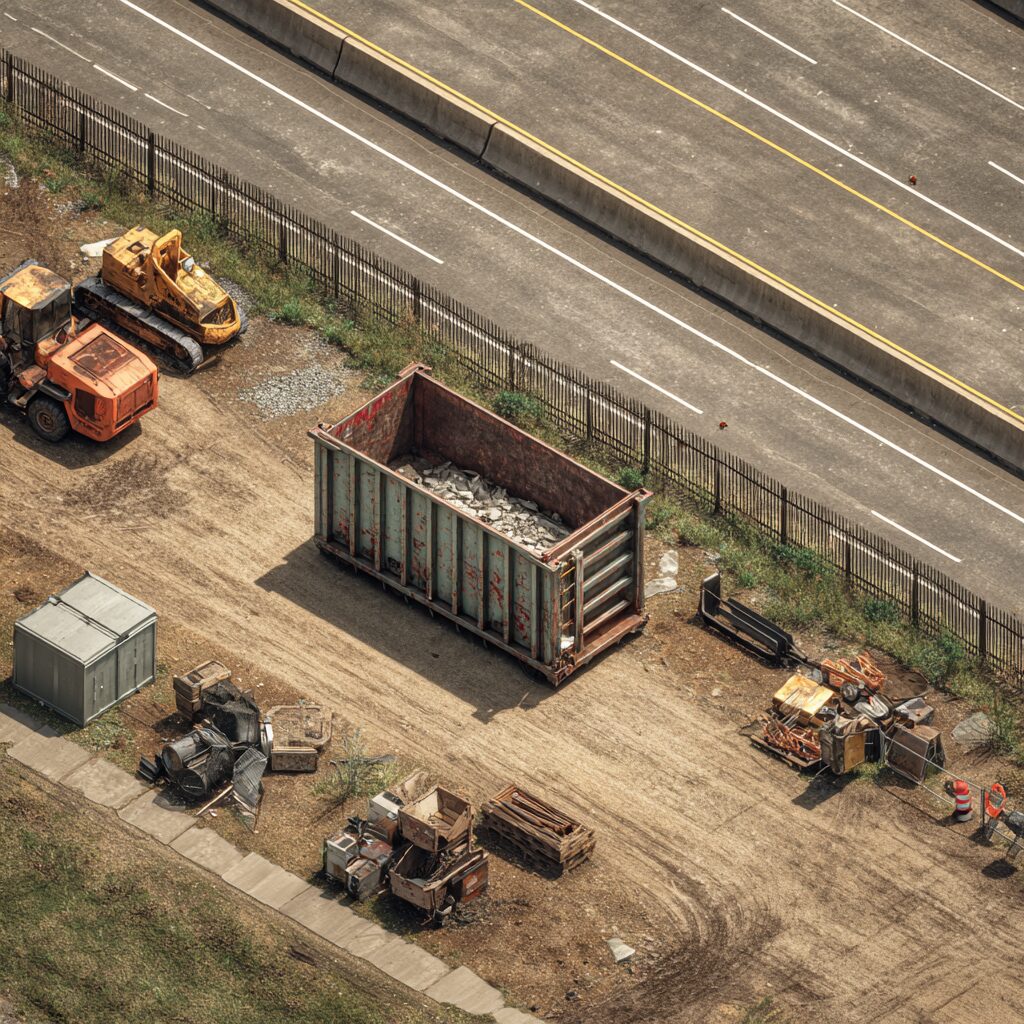
“Transportation infrastructure projects are unlike any other construction work – you’re dealing with heavy materials like concrete and asphalt that can max out weight limits in smaller containers, all while working in active traffic zones where every minute counts,” says the Prime Dumpster Pro. “Success comes down to matching your container size to the material density and coordinating deliveries around your traffic control plan, because the last thing you need is a delivery truck trying to navigate through your work zone during peak traffic hours.”
“Smart contractors always plan their waste management around the project phases – use compact 10-yard containers for dense concrete demolition, then switch to larger units when you’re handling bulky formwork and packaging materials. We’ve seen too many projects get delayed because crews filled a 40-yard container with asphalt millings and created a container that’s too heavy to move safely, so understanding material weight is just as important as understanding your debris volume when working on highways and bridges.”
Road work demands quick, organized debris handling that keeps lanes open and crews moving. We break use into three typical phases so you can match container size, placement, and swap cadence to the task.
Place a small fleet of yard units near the grinder. Smaller boxes handle heavy asphalt grindings without topping out axle limits. Schedule frequent pickup to keep the paver fed and the work face clear.
Segregate concrete from rebar and formwork to cut disposal costs. Use smaller boxes for concrete to control weight and larger units for bulky lumber and plastics. Stage one unit at the abutment and another at pier access when possible.
Map container positions around barriers and access gates. Account for truck turning radii and keep a clean approach so delivery and pickup happen during approved lane closures. Train spotters to guide trucks through cones and attenuators.
When road crews need fast, predictable hauling, size and weight drive every on-site choice. Pick the right box and you cut swaps, stay under weight caps, and keep work moving.
Compact footprint, heavy duty. Typical 12′ x 8′ x 3.5′ small yard boxes hold about four pickup loads. Use a 10 yard dumpster when you demo panels, curb, or approach slabs on bridges or short lane closures.
Extra capacity without a longer truck. A 15 yard dumpster fits tight urban arterials and carries roughly six pickup loads. It’s the sweet spot when weight matters but space is tight.
Balanced option for mixed construction and millings. At about 22’ long and 7.5′ wide, a 20 yard container holds around eight pickup loads. Choose this when crews produce both bulky formwork and dense grindings.
Scale up for bigger phases. Thirty-yard boxes (about 14 pickup loads) work well for full-depth reconstruction. Forty-yard units suit major demo and interchange rebuilds and hold roughly 16 pickup loads.
Many 20–40 yard units share a 21’11” length and near 7′ width. Heights run about 3’6″, 5’2″, and 7’0′. Taller walls slow hand loading and favor machine loading.
Put dense concrete and asphalt into smaller boxes to avoid weight overages. Save larger containers for light but bulky waste like form lumber and packaging.
Active work zones need smart placement so trucks move fast and crews stay safe. Start by picking solid, flat ground like stabilized aggregate or existing pavement. Mark the footprint so no one stacks pallets or cones where the truck must land.
Call utility locates before you stage a yard dumpster near shoulder cuts or conduit runs. Keep containers away from structures that may hide shallow lines or septic systems.
Give delivery crews a straight approach path free of attenuators and message boards. Leave room to tilt the bed without hitting lighting or signal masts. Use a spotter on every pickup and require PPE when anyone approaches the container.
Post a short prohibited list at each unit. Common exclusions include batteries, paints, oils, tires, refrigerators, water heaters, and medical waste. Enforce the list to avoid rejections and fines.
| Topic | Action | Why it matters |
| Placement | Stabilized pad; marked footprint | Prevents settling and keeps trucks aligned |
| Access | Straight approach; spotter; clear tilt zone | Speeds delivery and avoids damage |
| Compliance & pricing | Prohibit hazardous items; plan swaps; track tonnage | Reduces fines and controls costs |
Bring the pieces together with a simple checklist that controls weight, space, and schedule. Use it at the start of each shift and when scope changes.
Do this and you’ll save time, control costs, and keep crews moving safely across every work zone and home stretch.

We asked our Prime Dumpster Pros for their expert tips on the most common questions about using dumpsters for road repair and construction projects.
“For asphalt millings and concrete removal, stick with 10-15 yard containers because these materials are incredibly heavy and will hit weight limits long before they fill the container. A 20-yard container might look half-empty with asphalt debris, but it could already be at the 4-ton weight limit that makes it unsafe to transport.”
“Always position containers on stable ground outside the travel lanes, preferably on the shoulder or in a designated staging area that won’t interfere with traffic flow or your equipment operations. Make sure delivery trucks have a straight shot in and out without crossing active work zones – we’ve seen too many projects delayed because a container was placed where the pickup truck couldn’t safely access it.”
“Yes, any container placement on public right-of-way typically requires permits from the Department of Transportation or local highway authority, plus coordination with your traffic control plan. Most DOT permits specify exact placement locations, time windows for delivery and pickup, and safety requirements like reflective markings or barriers around the container.”
“You can mix them, but it’s usually smarter to separate them because concrete is significantly heavier and will fill your weight allowance faster than asphalt millings alone. Plus, some recycling facilities pay better rates for clean asphalt millings, so keeping them separate could actually save you money on disposal costs.”
“Plan all container movements during your approved lane closure windows and give your waste management company at least 48 hours notice for any schedule changes. We always recommend having a backup pickup window scheduled because weather delays or equipment issues can throw off your original timeline, and you don’t want a full container sitting in your work zone longer than necessary.”
Prime Dumpster specializes in transportation infrastructure waste management, facilitating container deliveries around traffic control plans and providing the specialized equipment needed for highway, bridge, and road construction projects. Our team understands the critical timing requirements of infrastructure work and delivers solutions that keep your crews productive while maintaining public safety.
Contact our team for help with all of your needs related to dumpster rentals for transportation infrastructure. We’ll help you streamline your next highway, bridge, or road construction operation while meeting all regulatory requirements and safety standards.
If you are looking for Dumpster Rentals for Government Projects Near Me, Click Here


