Mon - Sat 7:00 am to 7:00 pm


Mon - Sat 7:00 am to 7:00 pm

Ever wonder how construction crews turn rubble into results without trashing the planet? Choosing the right dumpster size for green construction starts with one simple decision that impacts budgets, timelines and Mother Nature herself. Strategic container selection transforms debris handling from chaotic to calculated, delivering both environmental wins and financial perks.
Selecting your project’s waste container isn’t just about finding something big enough – proper dumpster size for green construction means matching capacity with conservation. At Prime Dumpster, we’re experts in roll-off containers that demonstrate how the right dumpster size for green construction creates safer workspaces while keeping projects humming efficiently.
When renting an eco-friendly dumpster, you have several options. Here’s a rundown on the different types and when they’re typically the best choice.
| Dumpster Size | Common Construction Materials | Green Construction Tip |
| 10-Yard | Concrete chunks, asphalt pieces, heavy masonry debris | Compact size prevents overloading while weight limits force crews to separate heavy materials from lighter recyclables |
| 15-Yard | Roofing shingles, flooring materials, window replacements | Ideal for single-material projects that maintain clean waste streams for maximum recycling facility acceptance |
| 20-Yard | Drywall, framing lumber, electrical fixtures | The sweet spot for mixed renovations – large enough for efficiency, small enough to encourage proper sorting |
| 30-Yard | Commercial demolition debris, HVAC systems, mixed building materials | Use for phased projects where different materials can be collected separately over extended timelines |
| 40-Yard | Large-scale structural materials, steel beams, major demolition waste | Reserve for projects with dedicated recycling protocols and on-site material separation areas |
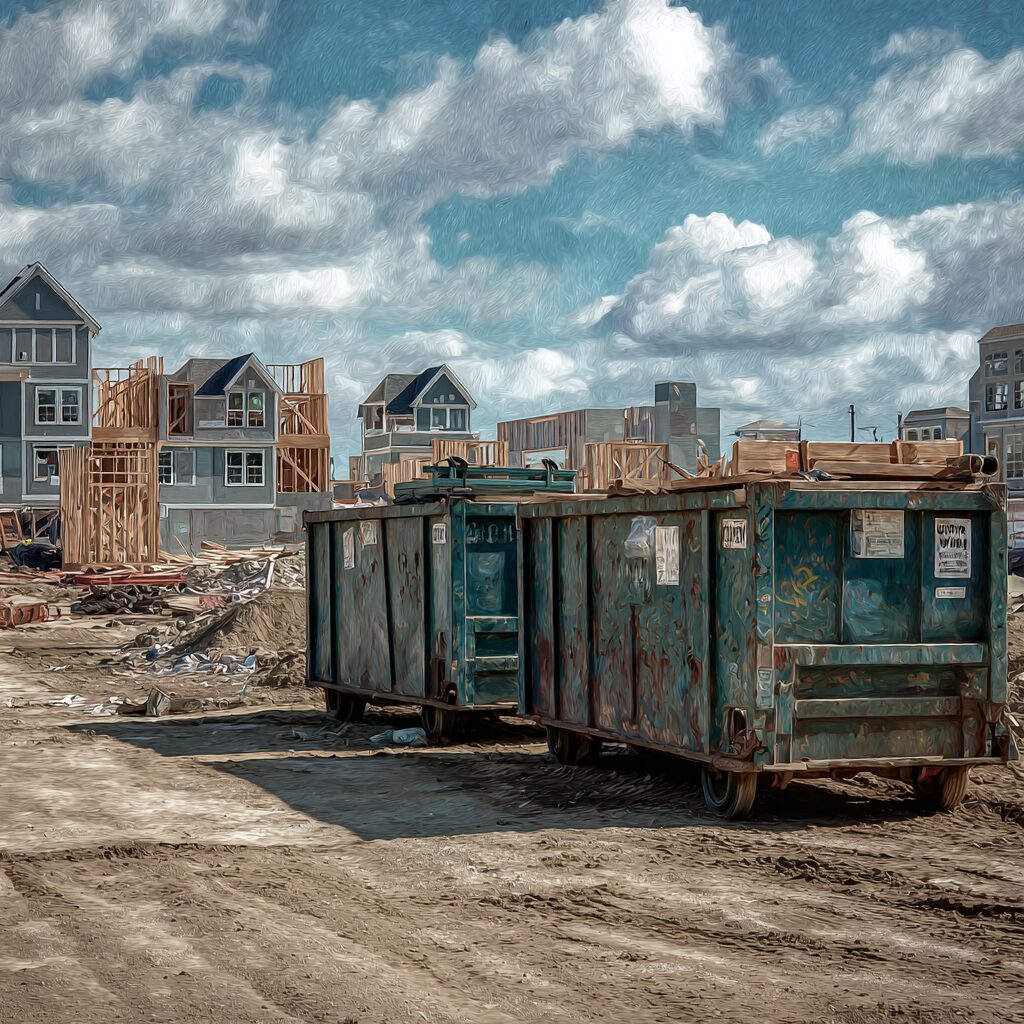
Choosing containers that align with your needs isn’t just about avoiding clutter – it’s about making every cubic inch count for the planet. Let’s explore how container dimensions translate to real-world efficiency.
| Capacity (Yards) | Dimensions (L×W×H) | Pickup Truck Loads | Best For |
| 10 | 12’×8’×3′ | 3-4 loads | Heavy materials like concrete, asphalt chunks |
| 15 | 16’×8’×4.5′ | 5-6 loads | Roofing projects, single-room renovations |
| 20 | 22’×8’×4.5′ | 7-8 loads | Mid-size demolitions, mixed construction debris |
| 30 | 22’×8’×6′ | 12-14 loads | Commercial builds, multi-room renovations |
| 40 | 22’×8’×8′ | 14-16 loads | Large-scale projects, major demolitions |
Note: Dimensions are approximate and may vary by location and manufacturer.
Using containers that match your actual needs cuts diesel consumption by reducing truck trips. Every unnecessary haul adds 20+ pounds of CO2 emissions – equivalent to burning 10 pounds of coal.
Properly filled containers also help recycling centers sort materials effectively. When containers overflow, up to 30% of recyclables end up in landfills due to contamination. Matching capacity to waste volume keeps salvageable materials clean and reusable.
What if your waste solutions could pay you back? Strategic container selection transforms debris handling from chaotic to calculated, delivering both environmental wins and financial perks.
Oversized bins tempt crews to toss everything together. But when containers match material types, sorting becomes second nature. Imagine separate zones for wood scraps, metal fragments, and concrete chunks – no more “mystery mix” that recycling centers reject.
| Material Type | Ideal Container | Recycling Rate Boost |
| Wood & Drywall | 15-yard closed top | +55% |
| Metal & Wiring | 10-yard roll-off | +70% |
| Concrete Rubble | 20-yard open | +40% |
LEED certification demands proof you’re diverting waste from landfills. Precise container planning helps track exactly what gets recycled versus trashed. One construction project in Austin boosted their score by 12 points simply by using color-coded 10-yard bins for different materials.
Smaller containers placed near work areas reduce lazy tossing. Workers recycle more when it’s easier than walking to a giant bin. Plus, cleaner separated materials fetch better resale prices – turning trash into treasure.
Imagine your construction site running like a recycling center on autopilot. Three container sizes dominate smaller eco-conscious projects – each offering distinct advantages when matched to specific phases.
A 10-yard unit handles kitchen remodels or bathroom upgrades effortlessly. Its compact design forces crews to sort materials immediately – wood scraps here, tile fragments there. Workers become recycling ninjas when space is tight.
Step up to 15 yards for whole-house cleanouts or attic-to-baseline renovations. This middle ground prevents overflow during multi-week projects while fitting neatly in suburban driveways. Bonus: Partial loads get hauled less frequently, slashing diesel exhaust in residential areas.
Twenty-yard containers hit the sweet spot for mixed material jobs. Roof tear-offs meet drywall installations here without chaos. Check how these workhorses stack up:
| Project Type | Materials Handled | Environmental Benefit |
| Deck Removal | Treated wood, concrete footings | 70% diversion rate |
| Office Retrofit | Ceiling tiles, wiring, flooring | 65% recycling average |
| Store Remodel | Fixtures, packaging, displays | 80% reuse potential |
Smart teams use 20-yard units during demolition phases when debris types multiply. Separate zones within the container keep copper pipes from tangling with insulation scraps.
Prime Dumpster Pro Tip: Working in a small space? Consider two 10 yard dumpsters instead of a 20, for example. Multiple dumpsters can allow for greater flexibility without sacrificing volume.
When your project’s footprint rivals a football field, half-measures won’t cut it. Oversized jobs demand containers that handle massive volumes without sacrificing eco-friendly principles. Let’s examine the heavy hitters of waste management.
Think three-car garage packed with materials. The 30-yard option (22’x8’x6′) swallows 14 pickup truck loads – ideal for hospital remodels or multi-story renovations. Its taller walls corral lightweight debris like insulation, preventing wind-blown litter across the site.
High-rise builders and stadium crews rely on these 22’x8’x8′ giants. Holding 16 truckloads, they transform chaotic sites into organized recycling hubs. A Las Vegas casino project recently used six 40-yard units to achieve 82% landfill diversion – their secret? Color-coded bins for glass, steel, and drywall.
Think of your debris pile as a math problem – one that solves both cost and environmental puzzles. Precise measurements prevent the “uh-oh” moments when materials spill over container edges or recycling gets rejected. Nail your numbers early, and watch efficiency soar.
Here’s your cheat sheet: Grab a tape measure. Multiply length, width, and height (in feet) of your debris pile. Divide that number by 27 – now you’ve got cubic yards. Example: A 6’x4’x3’ pile equals 72 cubic feet, or 2.66 cubic yards. Round up, always. That leftover space? It’s your buffer against guesswork disasters.
Construction materials play tricks. Drywall stacks like pancakes but settles like oatmeal. Dense concrete chunks devour space faster than insulation fluff. Measure each material type separately, then combine totals. Pro teams track debris daily – think of it as Tetris for grown-ups.
Smart estimators leave wiggle room. Adding 10% to your total prevents “Oops, we need another pickup” conversations. One roofing crew in Florida cut diesel trips by a third just by adding this buffer. Their secret? A chalkboard tally near the container.
Got mixed materials? Create separate piles first. Track lumber pieces versus metal scraps – their densities affect volume differently. A 20% overestimation cushion keeps recyclables sorted and haulers happy. Remember: Recycling centers love clean loads, not surprises wrapped in drywall dust.
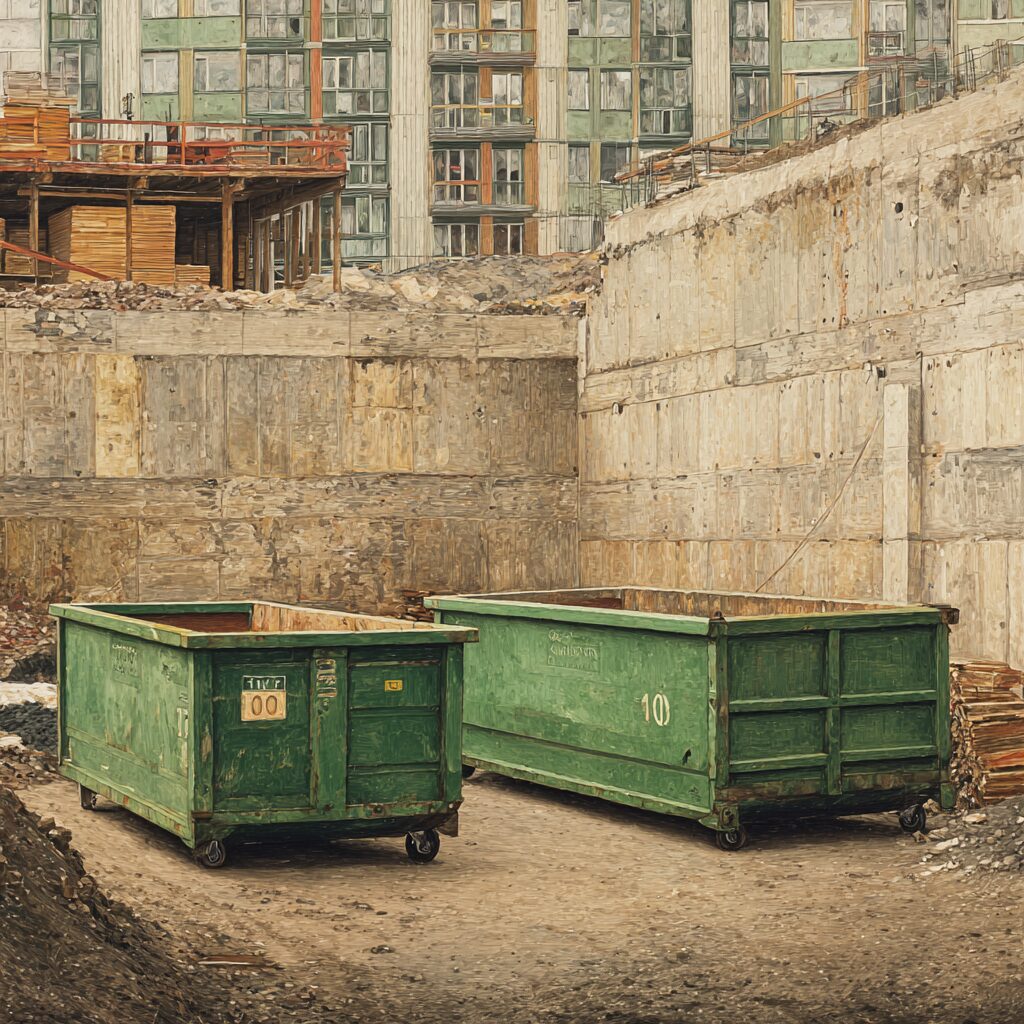
What’s the connection between your debris bin and polar ice caps? It’s simpler than you think – every container choice sends ripples through our ecosystem. Match capacity to need, and watch those ripples become waves of positive change.
Oversized bins guzzle resources before they even reach your site. Manufacturing and transporting them burns excess fuel – imagine driving a semi-truck to deliver a pizza. Properly scaled containers slash these hidden costs from day one.
| Container Option | Truck Trips Saved Monthly | CO2 Reduction (lbs) | Recycling Boost |
| Right-sized | 8 | 1,200 | 60% |
| Oversized | 3 | 450 | 25% |
Smaller containers force smarter sorting. Workers can’t just toss everything together when space is limited. Clean material streams mean recycling plants actually recycle instead of landfilling contaminated loads.
Here’s the kicker: Fewer hauls mean happier neighbors. One contractor in Phoenix cut complaints by 40% after switching to appropriately sized units. Their secret? Containers that left before the weekend rush.
Your reputation grows as your carbon footprint shrinks. Clients notice when you document reduced emissions and landfill diversions. Plus, those fuel savings? They’re not just eco-friendly – they’re budget-friendly too.
What separates a smooth project from a dumpster fire? Often, it’s how crews handle materials before they hit the bin. Smart debris strategies keep timelines tight while protecting both budgets and workers.
Right-sized containers act like traffic cops for your site. They prevent chaotic piles that trip workers or block equipment paths. One Chicago contractor reduced slip accidents by 65% simply by using properly scaled units that fit their daily output.
Neat sites impress clients more than you’d think. A Denver remodeler landed three referrals after neighbors praised their clutter-free operation. Their secret? Scheduling pickups when containers reached 80% capacity – never overflowing.
| Practice | Time Saved Weekly | Accident Reduction |
| Daily debris audits | 4 hours | 40% |
| Strategic pickup timing | 2.5 hours | 25% |
| Color-coded sorting | 3 hours | 55% |
Think of efficient waste handling as your silent project partner. It keeps crews focused on building – not babysitting trash – while padding your bottom line. Bonus: Those LEED points clients love? They’re easier to rack up when recycling streams stay pure.
Ever measured your worksite like a puzzle? Getting your waste solution right means fitting every piece – available area, truck access, and material types – into one cohesive plan. Let’s explore how to match your site’s unique challenges with eco-friendly debris management.
Start with a tape measure and walkthrough. Mark where the rental unit will sit, leaving 5 feet clearance on all sides. Delivery trucks need 12-foot wide paths – that oak tree by the driveway? It could turn into a $500 removal fee if drivers can’t maneuver safely.
| Site Factor | Common Issues | Smart Solutions | Environmental Benefit |
| Overhead Lines | Damaged cables during placement | Use low-profile 10-yard units | Prevents hazardous material spills |
| Narrow Driveways | Container blocks traffic flow | Opt for tandem 15-yard rentals | Reduces idling delivery trucks |
| Soft Ground | Sinking containers damage turf | Place plywood under supports | Protects local watersheds |
Communicate site photos to your rental company upfront. A 30-second video walkthrough prevents 90% of placement issues. One Denver crew avoided three rescheduling fees by showing their tight alley access beforehand.
Balance space limits with recycling needs through creative staging. Try placing two 10-yard units instead of one 20-yard – you’ll gain sorting areas while fitting narrow urban lots. Bonus: Crews recycle 40% more when bins are within arm’s reach.
Choosing the right dumpster size for green construction proves that environmental responsibility and operational efficiency work hand in hand to create successful projects that benefit both bottom lines and communities. From reducing carbon emissions through fewer truck trips to maximizing recycling rates through proper material separation, strategic container selection transforms waste management into a competitive advantage.
Smart project managers recognize that environmental stewardship and cost control create synergistic benefits when waste solutions match actual needs rather than guesswork estimates.
Contact us for expert guidance on dumpster size for green construction projects, and how to find can help your project achieve sustainability goals while maintaining the efficiency and reliability that keep construction schedules on track.
If you are looking for Complete Guide to Roll-Off Dumpsters for Retail and Shopping Centers, Click Here


