Mon - Sat 7:00 am to 7:00 pm


Mon - Sat 7:00 am to 7:00 pm

Ever wonder how construction sites turn rubble into green building credentials? The connection between dumpsters and LEED certification reveals how smart waste management transforms everyday debris handling into measurable environmental achievements that benefit both project budgets and sustainability goals.
LEED standards reward projects that minimize environmental impact through responsible material handling, making organized disposal systems essential for earning green building recognition. At Prime Dumpster, we’re experts in sustainable waste management, and we’ve created this comprehensive guide to help you understand how dumpsters and LEED certification work together to achieve green building goals.
Understanding how proper waste management supports green building goals helps construction projects achieve sustainability recognition while controlling costs.
Strategic waste management through proper container selection and material sorting transforms routine construction cleanup into measurable sustainability achievements that support LEED certification goals.

Imagine a world where every construction site leaves the planet better than it found it. That’s the vision behind today’s most recognized sustainability benchmark. Let’s unpack why this matters for your next build.
Think of LEED certification as a nutrition label for buildings. Developed by the U.S. Green Building Council, it measures how structures perform across energy use, water savings, and material choices. Over 100,000 commercial projects globally have earned this stamp of approval since 2019.
You’ll want this certification when creating spaces that prioritize both people and the environment. Commercial developments, schools, and multi-family housing often pursue it to meet tenant demands or qualify for local incentives. Bonus: Buildings with this credential report up to 20% lower maintenance costs.
LEED-certified buildings deliver measurable advantages that extend far beyond environmental recognition to impact operations, finances, and occupant satisfaction.
These diverse benefits explain why over 100,000 projects worldwide have pursued LEED certification as both an environmental commitment and a smart business strategy.
Gone are the days of “build fast, fix later.” Today’s projects use smart design to slash carbon footprints from day one. Energy-efficient HVAC systems? Check. Low-flow plumbing? Absolutely. But it’s not just about gadgets—it’s a mindset shift.
Construction teams now track every scrap of material like accountants. Why? Because proving you diverted 75% of debris from landfills could mean the difference between certification levels. This data-driven approach turns blueprints into living documents that evolve with each phase.
Start planning sustainability measures early. Document every eco-friendly choice, from recycled steel beams to low-VOC paints. Your future self will thank you when audit time comes.
What if your construction site’s trash could become your ticket to top-tier green recognition? Smart material handling transforms debris into measurable environmental wins. Let’s explore how organized disposal systems unlock sustainability achievements on construction sites.
Think of roll-off containers as backstage crew for your recycling show. Designated units for wood, metal, and concrete let teams sort materials faster than kids separating Halloween candy. This precision prevents usable resources from becoming landfill casualties.
Tracking becomes effortless when each material type has its own drop zone. Projects using multiple containers report 40% higher recycling rates according to recent EPA data. That’s music to LEED reviewers’ ears during credit evaluations.
Jobsite sustainability starts with visible systems workers actually use. Strategically placed containers become recycling stations that double as daily reminders. Crews quickly adopt earth-friendly habits when proper disposal options sit where work happens.
Adjust container sizes as projects evolve. Early demolition phases need heavy-duty units for concrete, while finish work requires smaller bins for drywall scraps. This flexibility keeps eco-goals on track from groundbreaking to punch list.
Contamination risks plummet when materials stay separated. Clean streams mean more recyclables actually get processed – crucial for hitting those 75% diversion targets. Your future certification paperwork will thank you for today’s smart sorting.
What’s the secret weapon for slashing project timelines while boosting eco-cred? It’s not magic – it’s math. Getting container logistics right cuts hauling time and landfill fees. Smart planning turns debris handling from headache to high-five moment.
Choosing the right container size with an understanding of weight limits, not just volume capacity. Heavy materials like concrete and masonry typically require 10-yard dumpsters regardless of space availability, while lighter debris can utilize larger containers for maximum efficiency.
| Project Phase | Ideal Container Size | Common Materials | Weight Considerations |
| Demolition | 10-yard (heavy) / 30-40 yard (light) | Concrete, bricks, drywall, roofing | Concrete limited to 10-yard due to weight limits |
| Framing | 20–30 yards | Wood scraps, packaging, metal fasteners | Mixed materials allow larger containers |
| Finish Work | 10-20 yards | Drywall, insulation, trim, flooring | Light materials maximize container volume |
Place containers where crews naturally gather debris – near cutting stations or demo zones. Workers won’t trek 100 yards to toss plywood offcuts if bins sit where hammers swing. Time studies show proper placement recoups 18 minutes hourly per worker.
Sync delivery schedules with project milestones. Need three units for roofing tear-off next Tuesday? Book them Friday. Label bins with spray-painted symbols: blue X for metal, red circle for concrete. Crews sort faster when instructions scream from container sides.
Walkways around units prevent tripping hazards and keep traffic flowing. Update providers weekly – “Swap our 20-yard for two 10s” beats last-minute panic. When containers work smarter, crews build faster.
Construction sites generate mountains of material scraps daily—but what if each piece could fuel your green building ambitions? Strategic sorting transforms debris into measurable wins. Let’s explore how organized systems turn chaos into compliance.
| Strategy | Action | Result | |
| Reduce | Pre-cut materials | Modular construction | 15-30% less scrap |
| Reuse | Salvage doors/windows | Donate leftovers | 40% materials repurposed |
| Recycle | Color-coded bins | Partner with processors | 75% landfill diversion |
Start with precise ordering. Measure twice, cut once isn’t just for carpenters—it slashes excess drywall and lumber. Prefabricated components arrive ready to install, minimizing onsite adjustments.
Designate zones for salvageable items. That stack of undamaged bricks? Future sidewalk material. Unused insulation? Local housing projects might need it. Workers spot reuse opportunities faster when collection points are obvious.
Track every pound like it’s cash. Digital logs beat scribbled notes—try apps that scan bin QR codes. Suppliers often provide weight tickets showing where materials went after leaving your site.
Snap photos of sorted piles before pickup. Time-stamped images prove proper handling. Bonus: Many processors share recycling confirmations via email, creating instant audit trails.
Adjust your system weekly. Notice metal scraps mixing with wood? Add another bin near welding stations. Small tweaks keep diversion rates climbing toward 90%+ targets.
What separates eco-champions from the rest? A rock-solid strategy for handling scraps. Smart projects treat debris like puzzle pieces – each bit has its place in the sustainability picture.
Launch your green game plan with a trash detective mission. Map out every material type your site will produce – concrete chunks, metal scraps, cardboard mountains. This intel shapes your container needs and sorting systems.
| Phase | Action | Outcome |
| Pre-Construction | Material forecasting | Right-sized containers |
| Active Build | Daily sorting checks | Clean recycling streams |
| Project Close | Final diversion report | Certification-ready data |
Assign waste warriors across crews. Electricians handle copper recycling. Drywall teams track gypsum disposal. Clear roles prevent “not my job” moments with materials.
Aim high but specific. 80% diversion isn’t just a number – it’s 4 out of 5 concrete blocks finding new life. Break targets into weekly milestones. Track progress during toolbox talks.
Partner with processors who provide digital receipts. Cloud-based tracking turns dumpster contents into instant reports. No more lost paperwork or fuzzy math.
Review results every Friday. Did wood waste exceed projections? Add a dedicated bin near framing crews. Adjust like a coach at halftime – small tweaks yield big wins.
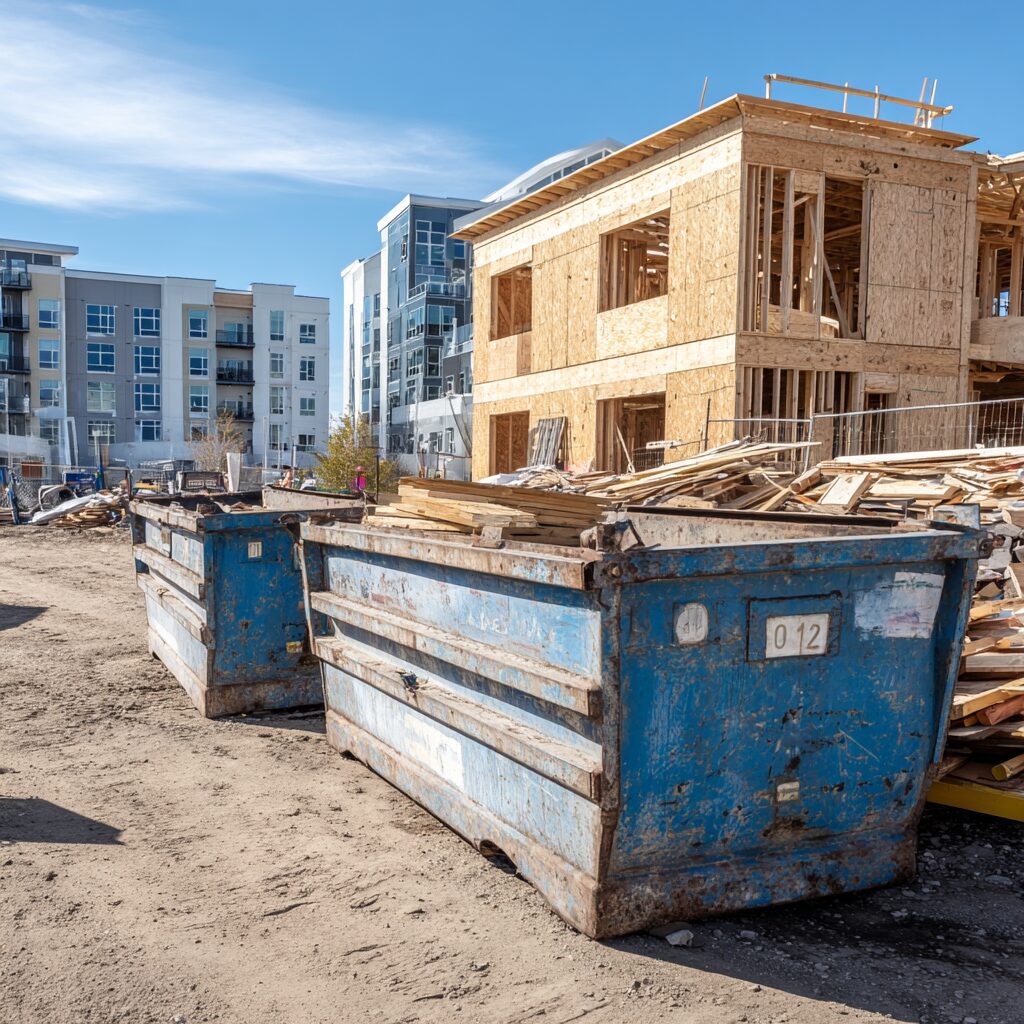
Transform your construction site’s waste workflow from chaotic to climate-conscious. Smart planning turns debris handling into measurable environmental wins while keeping crews safe. Here’s how to ace both.
Schedule container drop-offs like a pit crew changes tires. Match deliveries to project phases – heavy units for demolition week, smaller bins during finish work. This cuts truck trips by 30% according to recent industry studies.
Partner with local providers. Shorter hauls mean fewer emissions and faster response times. Track fill levels daily using apps that alert when containers reach 80% capacity.
Place units where workers naturally gather debris – never blocking emergency exits. Color-code bins using spray paint: yellow for metal scraps, green for wood. Teams sort faster when instructions jump off container walls.
Train crews weekly on hazardous material handling. That half-empty paint can? Special disposal protocols prevent soil contamination. Proper sorting ensures recyclables stay clean enough for processing.
These strategies slash disposal costs while meeting strict environmental standards. Remember – every sorted scrap proves your site’s commitment to building greener futures.
The strategic relationship between dumpsters and LEED certification proves that sustainable construction practices and operational efficiency work together to create projects that benefit both bottom lines and environmental goals.
From organized material sorting and comprehensive waste tracking to achieving the 75% diversion rates required for certification, proper waste management transforms routine construction activities into measurable sustainability achievements.
Smart project managers recognize that environmental stewardship and green building credentials require systematic approaches that start with proper waste handling and continue through detailed documentation of recycling success. Contact us to discover how our expertise in sustainable waste management can help your project leverage the powerful connection between dumpsters and LEED certification
If you are looking for Choosing the Right Dumpster Size for Green Construction, Click Here


