Mon - Sat 7:00 am to 7:00 pm


Mon - Sat 7:00 am to 7:00 pm
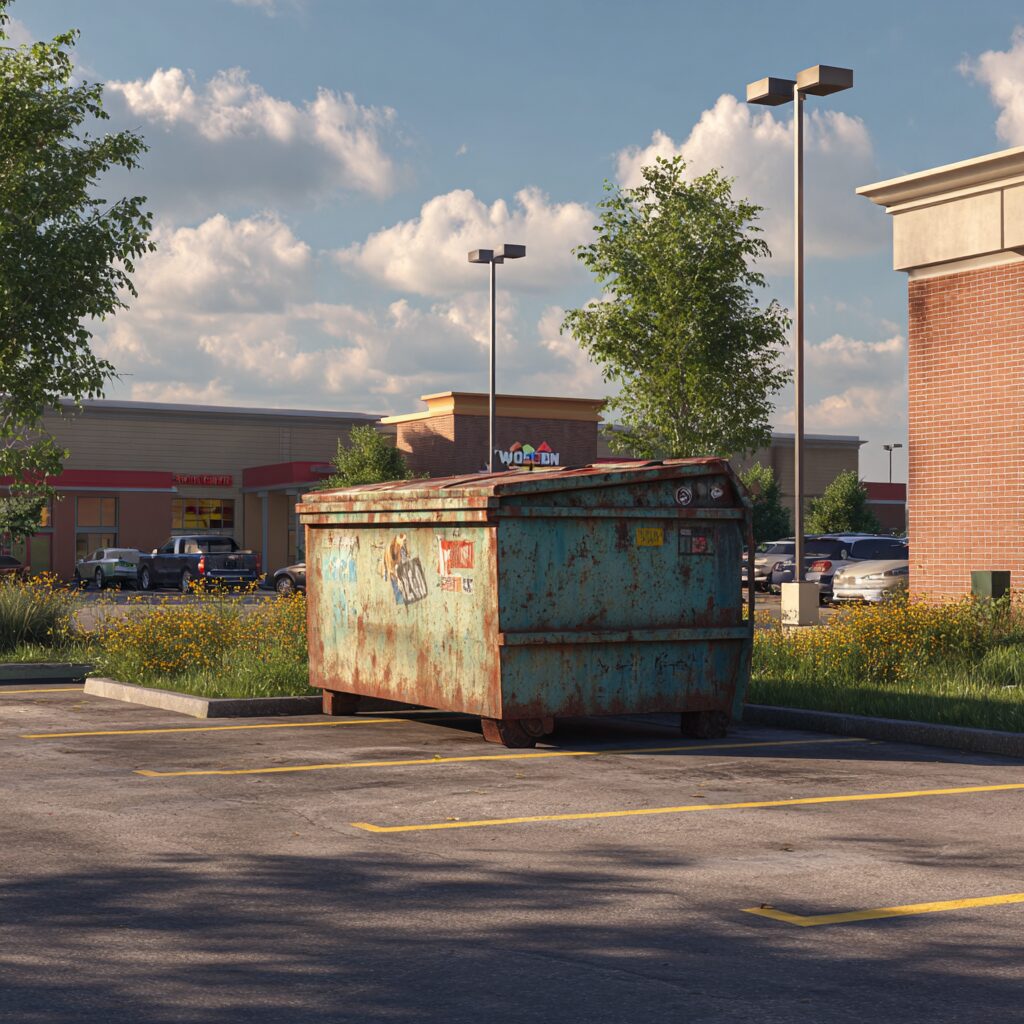
💡Welcome to this essential Q&A with the Prime Dumpster Pros, where our retail safety specialists share critical insights from coordinating secure dumpster operations in shopping centers, big box stores, and commercial retail environments! 💡
Retail construction projects present unique safety challenges that require balancing renovation needs with ongoing customer traffic and business operations. At Prime Dumpster, our team has developed comprehensive safety protocols for retail environments where construction dumpsters must coexist with shoppers, staff, and delivery operations without compromising anyone’s wellbeing.
We asked our Prime Dumpster Pros for their expert answers to the most common questions about dumpster safety for retail environments, covering everything from daily safety protocols to emergency response and regulatory compliance.

Retail construction projects require heightened dumpster safety protocols due to ongoing customer traffic and worker activity in shared spaces. Our safety experts outline essential precautions for protecting both staff and shoppers around construction dumpsters.
“Retail staff should maintain at least 10 feet of clearance from active dumpster loading areas and wear high-visibility vests when working near construction zones,” says a Prime Dumpster Pro. “Establish clear communication protocols with construction crews and designate specific times for dumpster access that don’t conflict with peak customer hours or staff movements.”
“When renovating a retail space, you’ll want to install temporary barriers and warning signage around dumpster areas to prevent customer access while maintaining clear sight lines for security monitoring.”
“Position containers away from main pedestrian pathways and shopping cart areas, and ensure adequate lighting around barriers to prevent trips and falls during evening hours,” explained a Prime Dumpster Pro.
“Workers loading construction dumpsters must wear steel-toed boots, work gloves, safety glasses, and hard hats when handling debris from retail renovation projects,” a Prime Dumpster Pro notes. “High-visibility clothing becomes especially important in retail environments where forklifts, delivery trucks, and customer vehicles share the same areas as construction activities.”
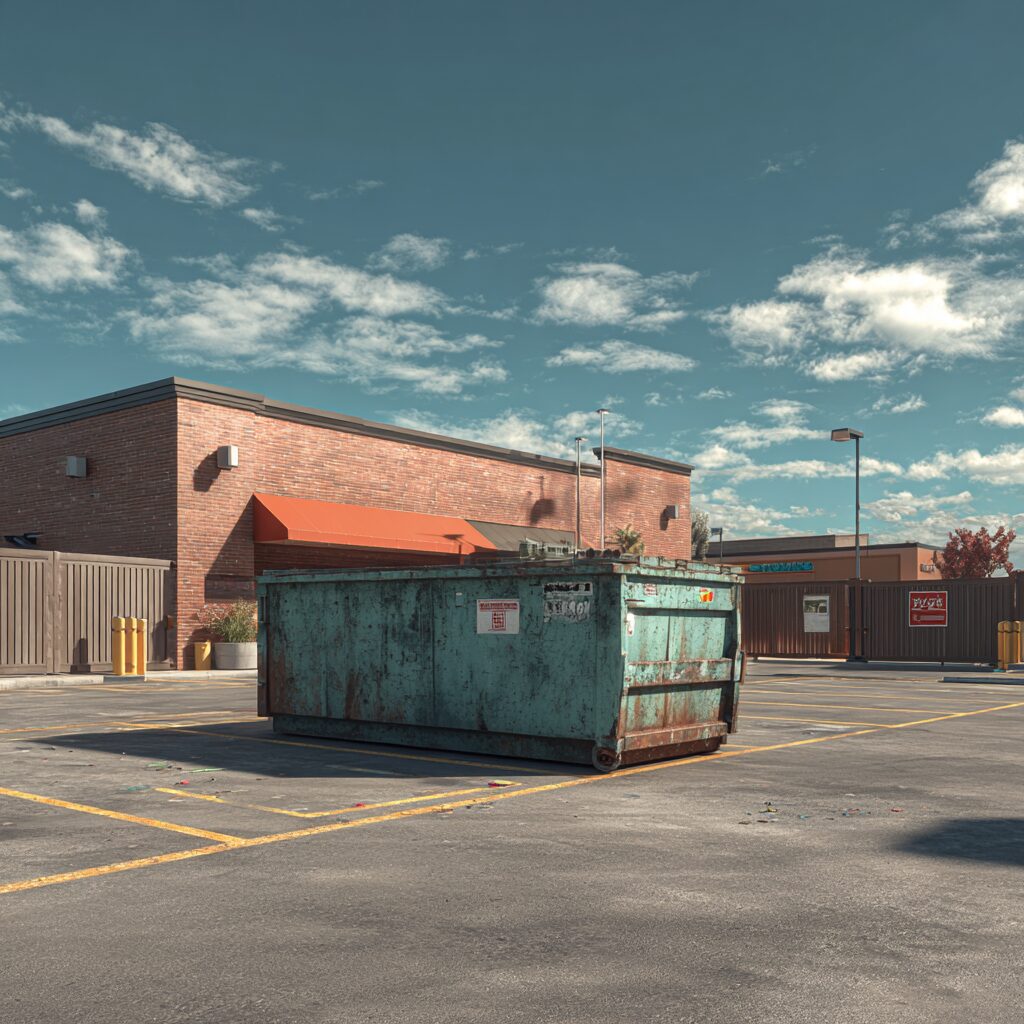
Strategic dumpster placement in retail settings balances construction needs with customer safety and regulatory compliance. Our logistics experts share essential guidelines for positioning containers that maintain safe operations while supporting renovation projects.
“Position dumpsters in designated service areas or loading zones that are physically separated from customer parking and pedestrian walkways. Maintain minimum 25-foot setbacks from store entrances and ensure containers don’t obstruct emergency vehicle access routes or create blind spots for drivers navigating parking areas,” says a Prime Dumpster Pro.
“Fire codes typically require 15-foot minimum clearances from building exits, fire lanes, and hydrant access points, though specific requirements vary by jurisdiction and building type,” explained a Prime Dumpster Pro.
“Most building codes require 20-30 foot clearances from primary entrances to prevent containers from blocking emergency egress or creating security blind spots.”
“ADA compliance also mandates clear accessible pathways that can’t be obstructed by dumpster placement, delivery vehicles, or debris staging areas during construction activities,” a Prime Dumpster Pro notes.

Emergency situations involving construction dumpsters in retail settings require immediate response protocols that prioritize customer and worker safety. Our emergency response experts outline critical procedures for handling accidents and preventing dangerous situations.
“Immediately secure the area with barriers or cones to prevent customer vehicle and pedestrian access, then contact emergency services if there are any injuries or hazardous material spills,” a Prime Dumpster Pro notes.
“Document the incident with photos for insurance purposes and notify your rental company immediately for professional cleanup and container replacement, as tipped dumpsters often require specialized equipment to safely upright and remove.”
“Evacuate customers and staff from the immediate area and call emergency services if hazardous chemicals or unknown substances have spilled from construction debris,” explained a Prime Dumpster Pro. “Never attempt to clean unknown spills yourself – professional hazmat teams have the equipment and training needed to safely contain and remove dangerous materials that might have been improperly disposed of in construction dumpsters.”
“Establish clear protocols that include immediate first aid response, emergency service contact procedures, and incident documentation requirements for any injuries occurring near construction dumpsters. Train key staff members in basic first aid and ensure they know how to quickly contact both emergency services and your insurance provider to begin proper claims processing,” said a Prime Dumpster Pro.
Retail construction projects must navigate complex regulatory requirements that protect workers, customers, and business operations. Our compliance experts address the legal and insurance considerations that retail managers need to understand when coordinating dumpster rentals.
“OSHA mandates specific placement requirements for construction dumpsters that maintain clear egress routes and don’t create hazards for workers or customers in retail environments,” says a Prime Dumpster Pro. “Containers must be positioned to allow emergency vehicle access and can’t block required safety equipment like fire extinguishers, emergency exits, or first aid stations.”
“Municipal zoning codes often restrict dumpster placement in commercial districts, requiring permits for containers placed on public property or visible from main thoroughfares.”
“Shopping centers typically need approval for extended placements that exceed 30 days, and some jurisdictions require screening or specific setback distances from residential areas,” explained a Prime Dumpster Pro.
“Retail property managers should verify that dumpster rental agreements include adequate liability coverage for customer injuries and property damage that might occur near construction containers,” a Prime Dumpster Pro notes.
“Additional umbrella coverage often becomes necessary during major renovation projects, and tenant lease agreements should specify responsibility for dumpster-related incidents to prevent coverage gaps between property owners and retail tenants.”
Thank you for meeting our team!
Having your questions about dumpster safety for retail and shopping centers answered by experienced professionals helps prevent accidents and ensures compliance with safety regulations that protect both customers and workers. Understanding proper protocols, placement requirements, and emergency procedures creates safer retail environments while supporting successful renovation and construction projects.
Our experienced team at Prime Dumpster specializes in retail safety coordination that prioritizes customer protection while enabling efficient construction waste management. Contact our team to learn how our safety-focused approach to retail dumpster services can protect your business operations while meeting all regulatory requirements.
If you are looking for Q&A with the Prime Dumpster Pros: Dumpster Rentals for Retail Stores, Click Here


