Mon - Sat 7:00 am to 7:00 pm


Mon - Sat 7:00 am to 7:00 pm
💡Welcome to another installment of Q&A with the Prime Dumpster Pros, where we’re asking our team members for their professional insights on dumpster rentals and use💡
Retail businesses face unique waste management challenges from store renovations and inventory changes to parking lot repairs and location closures. At Prime Dumpster, our team has coordinated roll-off dumpster solutions for retail chains, independent stores, and shopping centers nationwide, understanding the operational demands that keep businesses running smoothly during transitions.
We asked our Prime Dumpster Pros for their expert answers to the most common questions about roll-off dumpsters for retail stores, covering everything from practical applications to cost considerations for business owners.

Retail environments generate diverse waste streams from renovations, inventory changes, and operational needs. Our experts explain how roll-off dumpsters serve different retail scenarios and help store managers coordinate efficient waste removal.
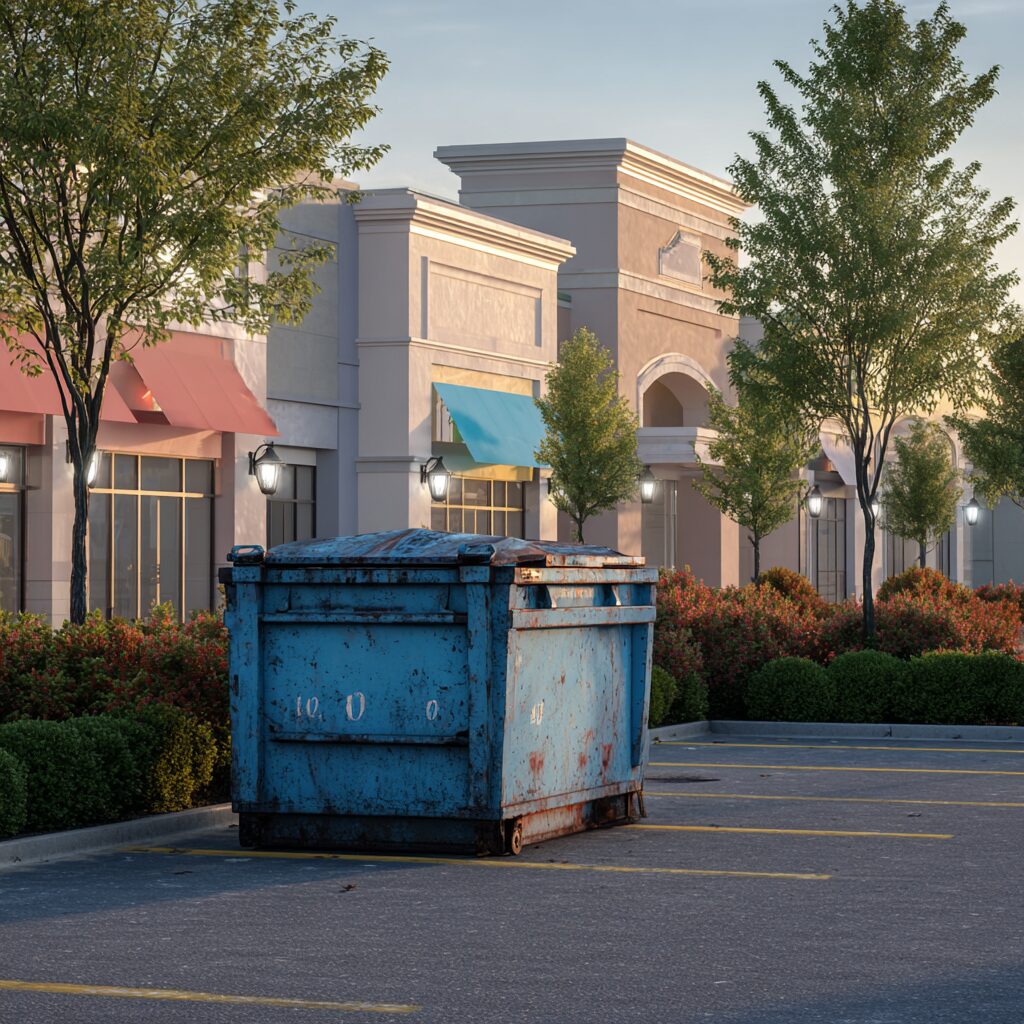
“Retail renovations create mixed debris streams including old fixtures, flooring materials, drywall, and display equipment that regular waste service can’t handle,” says a Prime Dumpster Pro. “Roll-off containers positioned near loading docks or service entrances keep renovation debris separate from daily trash while maintaining customer access to store fronts during construction phases.”
“Both 10-yard and 20-yard containers are popular choices for retail applications, depending on store size and closure scope.”
“A 10-yard dumpster works perfectly for smaller boutiques or specialty stores disposing of remaining inventory, fixtures, and basic store materials, while 20-yard units better serve cleanouts for larger retail spaces or department stores with extensive shelving, mannequins, and bulkier display equipment,” explained a Prime Dumpster Pro.
“Parking lot renovations require strategic dumpster placement that maintains customer access while accommodating asphalt removal, concrete debris, and striping materials,” a Prime Dumpster Pro notes. “Position containers in designated areas that don’t block fire lanes or ADA-compliant parking spaces, and coordinate with paving contractors to ensure pickup timing aligns with project phases.”
“Retail stores generate seasonal waste spikes from inventory changes, holiday decorations, packaging materials, and store reset projects that exceed regular waste capacity. End-of-lease cleanouts, fixture upgrades, and emergency situations like water damage also create large-volume disposal needs that only roll-off containers can handle efficiently,” said a Prime Dumpster Pro.

Understanding the fundamentals of roll-off containers helps retail stores and shopping centers make informed decisions about waste management solutions. Our experts clarify common questions about who uses these containers and what limitations apply.
“Construction companies, retail chains, manufacturing facilities, and property management companies rely heavily on roll-off containers for their flexibility and capacity,” explained a Prime Dumpster Pro. “Restaurants use them during kitchen renovations, office buildings need them for tenant improvements, and event venues depend on roll-offs for large gatherings that generate more waste than regular pickup services can handle.”
“Hazardous materials like paint, chemicals, batteries, and electronics are prohibited in standard roll-off containers due to environmental regulations and disposal facility requirements.”
“Appliances with refrigerants, tires, mattresses, and medical waste also require special handling, while flammable liquids and asbestos-containing materials can contaminate entire loads and result in expensive disposal fees,” says a Prime Dumpster Pro.
“Roll-off containers are temporary, open-top units designed for large-volume disposal projects, while commercial front-load dumpsters provide ongoing waste service with smaller capacities and enclosed designs,” a Prime Dumpster Pro notes. “Roll-offs get delivered by specialized trucks that can place them precisely where needed, then picked up when full, making them ideal for one-time projects or seasonal waste spikes.”
“Private property placement typically doesn’t require permits, but positioning roll-offs in parking lots shared with other businesses or on public property usually needs municipal approval. Most rental companies help navigate local requirements and can advise about placement restrictions, fire lane clearances, and ADA compliance issues that affect retail locations,” said a Prime Dumpster Pro.

Pricing questions are among the most common questions about roll-off dumpsters for retail stores that we receive. Financial considerations play a major role when retail businesses evaluate whether to purchase or rent roll-off containers. Our experts break down the costs and scenarios where ownership might make sense for established retail operations.
“New roll-off containers typically cost $3,000 to $6,000 depending on size and construction quality, while rental rates average around $400 to $800 per week for most retail applications,” says a Prime Dumpster Pro.
“The break-even point usually occurs around 8-12 rental cycles, but ownership also requires storage space, maintenance costs, and disposal logistics that many retailers prefer to avoid,” explained a Prime Dumpster Pro.
“Smart retailers factor in frequency of use, storage costs, truck rental for pickup and delivery, plus disposal facility fees when calculating total ownership costs,” a Prime Dumpster Pro notes. “Businesses using roll-offs monthly or more frequently might see savings from ownership, while occasional users typically find rental more cost-effective when all expenses are considered.”
“Dumpster ownership involves maintenance like welding repairs, paint touch-ups, and replacement parts, plus insurance coverage and storage facility costs when containers aren’t in use.”
“You’ll also need relationships with disposal facilities, transportation arrangements, and staff time to coordinate pickups and deliveries that rental companies handle automatically,” said a Prime Dumpster Pro.
“Large retail chains with predictable, high-volume waste streams and existing fleet management capabilities sometimes benefit from ownership, especially for standardized store renovations or seasonal inventory changes,” explained a Prime Dumpster Pro. “However, most retailers find that rental flexibility, maintenance-free service, and predictable costs make renting the better choice even for frequent users.”
Thank you for meeting our team! Now you know the answers to the most common questions about roll-off dumpsters for retail stores.
Roll-off dumpsters provide retail businesses with flexible waste management solutions that adapt to renovation schedules, seasonal changes, and operational needs. Understanding proper applications, restrictions, and cost factors helps store managers make informed decisions that support business continuity while managing waste efficiently.
Our experienced team at Prime Dumpster specializes in retail waste management solutions that work around business hours and customer access requirements. Contact us to learn how our roll-off dumpster services can support your retail operations through renovations, expansions, or location transitions.
If you are looking for Guide to Dumpster Rental for Retail Store Renovation, Click Here


