Mon - Sat 7:00 am to 7:00 pm


Mon - Sat 7:00 am to 7:00 pm

🍂 Autumn weather brings distinct obstacles for managing dumpster and porta potty operations. In our Fall Site Services Series, we’re examining how to ensure your site services run smoothly and cost-effectively throughout the fall months. 🍂
Fall storms present serious threats to portable equipment as high winds and heavy rains can flip units, create flooding hazards, and block critical access routes. Construction superintendents, event planners, and facility managers must implement proactive measures to secure dumpsters and portable restrooms before weather conditions deteriorate.
At Prime Dumpster, we’ve facilitated site services for thousands of seasonal events and construction projects nationwide. Our guide provides step-by-step emergency preparation strategies that protect both equipment and personnel during autumn’s most dangerous weather events.
Fall weather creates unique challenges for portable equipment as high winds, heavy rains, and debris can cause serious safety hazards and operational disruptions. Proper storm preparation keeps porta potties and dumpsters secure while maintaining safe access for users and service crews.
The company delivering the equipment will typically also handle placement and storm preparation as part of their service protocols. However, understanding these preparation processes helps site managers coordinate effectively and recognize when additional protective measures may be necessary for their specific locations.
High winds can tip over portable restrooms, while flooding can make units unstable and create contamination risks. Heavy rain and debris can also block doors and damage ventilation systems, making facilities unusable when people need them most.
Strong winds can shift or tip rented rolloff dumpsters, while heavy rains can cause flooding that makes dumpsters float or become inaccessible. Flying debris and loose materials can also damage lids and create dangerous projectiles around work areas.
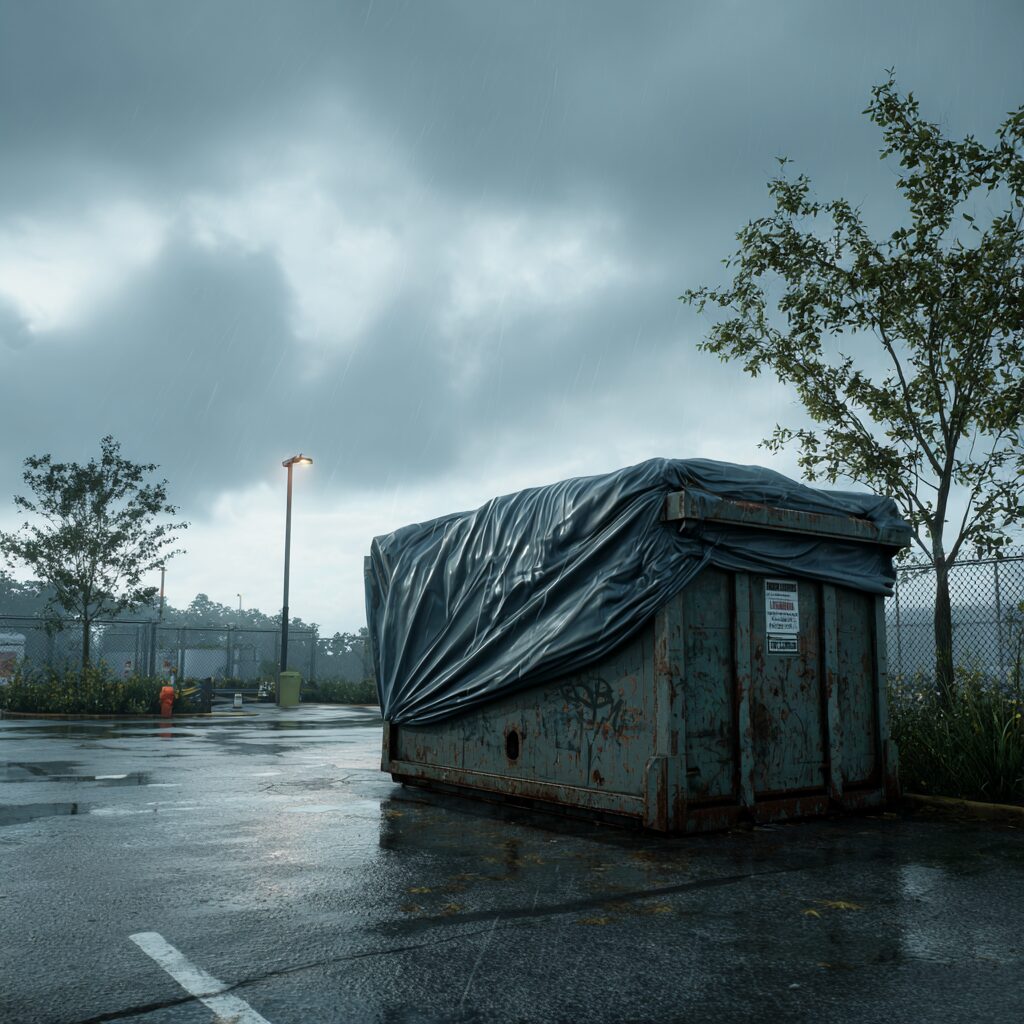
When autumn weather shifts, portable restrooms and dumpsters face real risks from wind, water, and flying debris. You’ll want to know what can go wrong so you can act before a gust or heavy rain turns routine maintenance into an emergency.
High winds can flip light units, send material into pathways, and cause serious damage. Loose signs, fencing, pallets, and trim become projectiles that can dent doors and break glass in nearby trailers or windows.
Fallen power lines can energize standing water. Avoid entry until utilities are cleared.
Sustained water soaks pads and levels, making units unstable. Flooding can float or tilt dumpsters and toilets, blocking access and increasing cleanup needs.
Wind-driven rain forces water into seals and vents. Debris can jam doors and lids, stopping use and slowing crews. Contaminated runoff entering units raises sanitation and environmental concerns.
| Hazard | Typical Effects | Quick Mitigation |
| High winds | Tipping, shifted units, blown lids | Anchor units, use sandbags, relocate to sheltered area |
| Debris | Blocked doors, punctures, access delays | Clear loose materials, secure fencing, set buffer zones |
| Flooding | Floating containers, contaminated water | Move to high ground, seal vents, map secondary routes |
| Overhead utilities | Electrified water, dangerous cleanup | Coordinate with utility crews, keep crews away from puddles |
When a hurricane nears, clear decision points keep crews safe and equipment secured. Use official timing to move from inspection to action without drama.
Interpreting alerts: A hurricane watch means conditions are possible in a stated area about 48 hours before expected tropical-storm-force winds. A hurricane warning means hurricane-force winds are expected and is issued about 36 hours before tropical-storm-force winds begin.
Track the National Weather Service and local emergency management for the latest alerts and road closures. Keep written emergency numbers and key contacts in your phone and on paper.
Decide early whether crews will stay home, shelter on-site in a hard room, or evacuate. Authorities may advise evacuation based on hazards and driving conditions. Never drive through flooded areas.
| Alert | When Issued | Actions (quick) |
| Hurricane watch | ~48 hours before tropical-storm-force winds | Inspect units, stage anchors, gather supplies, confirm contacts |
| Hurricane warning | ~36 hours before tropical-storm-force winds | Secure or relocate units, shut off power if flooding or downed lines, begin evacuation if ordered |
| All-clear | After hazards pass and authorities say safe | Account for crew, inspect equipment, restore operations |
When winds pick up and rain moves in, portable toilets need quick, practical measures to stay put. Start with a fast inspection and a clear plan.
Anchor standard units to the ground with stakes, ballast bags, or ratchet straps. Tie straps to a solid building element or heavy anchor points. Keep doors latched to cut down on the sail effect when high winds hit.
Shut and cap water lines and secure hoses. Turn off power to pumps and generators to avoid electrical hazards if wet ground shows signs of flooding. Place absorbent pads and small secondary containment under points that might leak.
Use wider pads or plywood under the unit and ramps to prevent soft ground from trapping mobility devices. Tie down ramp edges and keep a clear egress route so evacuees and crews don’t get blocked by shifting soil or debris.
Inspect hitches, safety chains, lights, and tires. Chock both sides of each wheel and move towable units to higher ground well before a hurricane warning goes active. Avoid placement near trees, crane radii, or overhead lines to reduce risk from falling branches or downed power lines.
| Unit Type | Top Action | Protective Measure |
| Standard | Anchor to ground | Stakes, ballast, latched doors |
| Flushable/Sink | Cap water and cut power | Absorbents, secondary containment |
| Towable/ADA | Chock and relocate | Wider pads, ramp tie-downs |
A loose rolloff can cause delays, property damage and extra cleanup when winds rise and rain falls. Take a few straightforward steps related to site service storm prep for fall to lock down containers before conditions worsen. These tips work on construction lots, at festivals, in retail lots and at home projects.
Pick level ground away from wind corridors and block wheels where possible. Keep weight low and centered so gusts don’t tip side panels.
Cover loads tightly to keep water out and prevent soaked material from shifting balance when trucks can’t reach your location.
Turn the long side away from prevailing winds and fit lids or heavy tarps that lash to anchor points. Avoid staging near building entrances or corners where wind accelerates.
Post clear signage: lids closed, no overfill. Overhang acts like a sail and creates more debris and damage when high winds hit.
Choose spots with natural wind breaks and add bracing if allowed. Keep boxes away from scaffolding and energized equipment and mark no-go zones if power stays on.
Inspect hinges and hooks now. Plan hauls ahead of any hurricane warning and place containers on higher ground to reduce flooding risk.
| Container | Top Action | Why it matters |
| 10–15 yd | Level and block | Prevents tipping and panel damage |
| 20–30 yd | Lid/tarp and orient | Reduces wind exposure and lost covers |
| 40 yd | Bracing and setbacks | Protects building, gear and crews |
As conditions worsen, simple steps with supplies and power plans make the difference between chaos and calm. Gather essentials, name roles, and move quickly but safely.
Prepare an emergency kit that crews can grab in minutes. Pack first aid supplies, batteries, flashlights, gloves, tarps, tape, and a handheld radio.
Write down emergency phone numbers and post them where everyone can see. Keep spare phone chargers and a hard copy list in the kit.
Close and latch restroom doors, strap or tape lids, and cinch dumpster covers. Clear yards of loose items that can blow into windows or become projectiles.
Preplan who will cut power and close valves if flooding or downed power lines appear. Stage fuel for generators safely, follow gas handling rules, and position exhaust away from any room where people shelter.
Fill clean containers with water and store easy-to-open food. Expect interruptions and assign someone to monitor National Weather Service alerts and local authorities.
Do not rush out. Check for downed power lines, structural shifts, and flooding that undercuts pads before moving units. Document damage with photos and time-stamped notes before cleanup or evacuation.
| Action | Who | Why |
| Grab kit | Crew lead | Swift response, medical aid |
| Secure lids/doors | All crew | Reduce debris and damage |
| Shut power/water | Designated tech | Prevent electrocution and flooding |
| Post-event inspect | Supervisor | Safety before reentry |
Effective site service storm prep for fall requires understanding weather patterns and implementing protective measures before conditions become dangerous, ensuring your portable equipment remains secure and accessible throughout autumn’s challenging storm season.
Prime Dumpster’s commitment to site service storm prep for fall combines emergency management expertise with practical solutions that keep your operations running safely through severe weather events. Contact our team to learn more about how comprehensive preparation strategies can help you maintain secure, accessible site services through every autumn weather challenge.
If you are looking for Guide to Dumpster Rentals for Landscapers in Fall, Click Here


