Mon - Sat 7:00 am to 7:00 pm


Mon - Sat 7:00 am to 7:00 pm
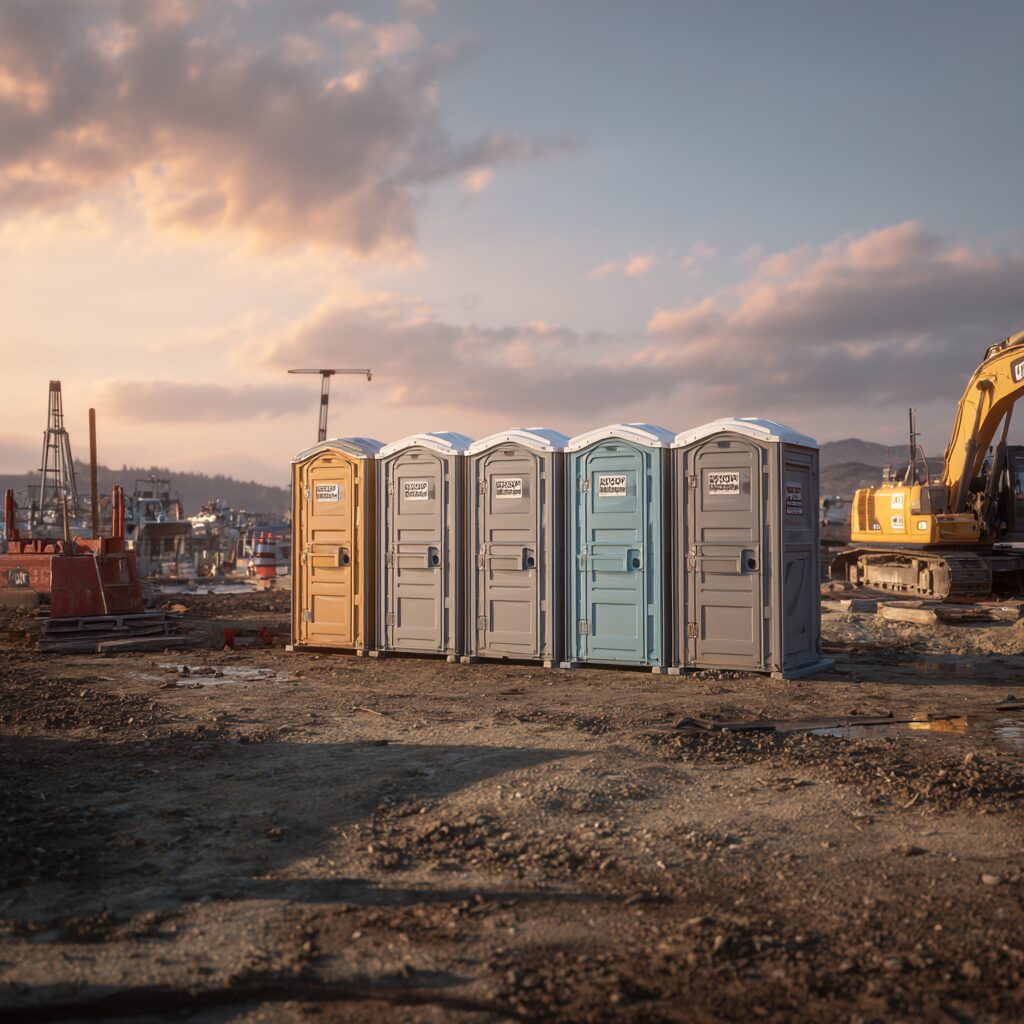
💡Welcome to another installment of Q&A with the Prime Dumpster Pros, where we’re asking our team members for their expert insights on managing portable restroom logistics alongside specialized trade work! 💡
Construction site coordination involves dozens of moving parts, and coordinating porta potties with trade contractors often gets overlooked until conflicts arise mid-project.
Electrical trenching disrupts restroom access, plumbing crews need clear paths to sewer tie-ins, and roofing material staging takes over building perimeters where porta potties were originally placed.
At Prime Dumpster, our team has coordinated sanitation logistics for construction projects nationwide. We asked our Prime Dumpster Pros for their expert answers to the most common questions about coordinating porta potties with trade contractors, covering logistics for electrical crews, plumbing contractors, and roofing teams working on active construction sites.
We asked our Prime Dumpster Pros for their expert guidance on coordinating portable restroom logistics with electrical contractors working on construction sites.
“Porta potties become major obstacles when electricians need to trench for underground conduit or run exterior power feeds along building perimeters. Units placed without considering electrical rough-in schedules force crews to work around them, adding time and creating awkward routing that doesn’t meet code. Always review electrical plans before finalizing porta potty locations, especially near service entry points and exterior panel locations where conduit runs are predictable.”
“Exterior lighting installations around buildings often conflict with porta potty placement because both need accessible, level areas near structures. The good news is most rental companies can reposition units within 24 to 48 hours if you give them advance notice. Coordinate with your electrician about lighting locations during the planning phase, then schedule porta potty relocation before the electrical crew starts, rather than discovering conflicts when they show up with equipment.”
“Absolutely, and the sooner the better. Trenching for underground electrical service creates deep excavations that make porta potty access unsafe, plus heavy equipment operating near units creates tipping hazards for anyone using facilities. Move units at least 20 feet away from planned trench lines before excavation starts. This protects both your electrical crew and workers using the restrooms from dangerous conditions.”
“Electrical rough-in happens early in construction sequencing, so porta potties need to be on-site before electricians arrive but positioned where they won’t block conduit runs or panel installations. Schedule delivery a day or two before electrical work starts, choosing locations away from known service entry points and exterior wall areas where conduit will run. If your electrical plans show extensive site work, keep porta potties mobile by avoiding spots that’ll need relocation once trenching begins.”

We asked our Prime Dumpster Pros for their practical advice on coordinating portable restrooms with plumbing contractors throughout construction phases.
“Keep porta potties on-site until interior plumbing passes final inspection and fixtures are 100 percent operational, not just installed. We’ve seen too many projects rush removal once toilets are bolted down, then discover inspection failures or supply line leaks that keep bathrooms unusable for days. Plumbers, electricians and finish carpenters still need facilities while they’re wrapping up punch list items, so schedule porta potty pickup for the day after your last trade contractor leaves the site.”
“Sewer line tie-ins almost always happen at specific points along property lines or near streets, and porta potties blocking these access points create massive headaches for plumbing crews. Check your site plans for sewer lateral locations before delivery day, then keep a 15 to 20 foot buffer around those areas. Plumbers need room for excavation equipment, pipe staging and inspection access, so what looks like empty space is actually critical work zone for underground connections.”
“Temporary water service for construction often gets installed near the same convenient locations where you’d naturally place porta potties, creating competition for limited space. Talk to your plumber about where they’ll run temporary water lines and locate hose bibs before finalizing porta potty placement. If luxury restroom trailers need water hookups themselves, coordinate that with your plumber’s temporary service installation to avoid duplicate work or conflicting connections.”
“Definitely keep them there through inspections and testing because interior bathrooms aren’t officially usable until inspectors sign off and all fixtures pass pressure tests. Plumbing inspections can take days to schedule, and testing sometimes reveals leaks or code violations requiring repairs before bathrooms become functional. Your crew still needs sanitation during this limbo period, so plan for porta potties to stay until you get that final plumbing approval and know interior facilities actually work.”
We asked our Prime Dumpster Pros for their practical advice on coordinating portable restrooms with plumbing contractors throughout construction phases.
“Keep porta potties on-site until interior plumbing passes final inspection and fixtures are 100 percent operational, not just installed. We’ve seen too many projects rush removal once toilets are bolted down, then discover inspection failures or supply line leaks that keep bathrooms unusable for days. Plumbers, electricians and finish carpenters still need facilities while they’re wrapping up punch list items, so schedule porta potty pickup for the day after your last trade contractor leaves the site.”
“Sewer line tie-ins almost always happen at specific points along property lines or near streets, and porta potties blocking these access points create massive headaches for plumbing crews. Check your site plans for sewer lateral locations before delivery day, then keep a 15 to 20 foot buffer around those areas. Plumbers need room for excavation equipment, pipe staging and inspection access, so what looks like empty space is actually critical work zone for underground connections.”
“Temporary water service for construction often gets installed near the same convenient locations where you’d naturally place porta potties, creating competition for limited space. Talk to your plumber about where they’ll run temporary water lines and locate hose bibs before finalizing porta potty placement. If luxury restroom trailers need water hookups themselves, coordinate that with your plumber’s temporary service installation to avoid duplicate work or conflicting connections.”
“Definitely keep them there through inspections and testing because interior bathrooms aren’t officially usable until inspectors sign off and all fixtures pass pressure tests. Plumbing inspections can take days to schedule, and testing sometimes reveals leaks or code violations requiring repairs before bathrooms become functional. Your crew still needs sanitation during this limbo period, so plan for porta potties to stay until you get that final plumbing approval and know interior facilities actually work.”
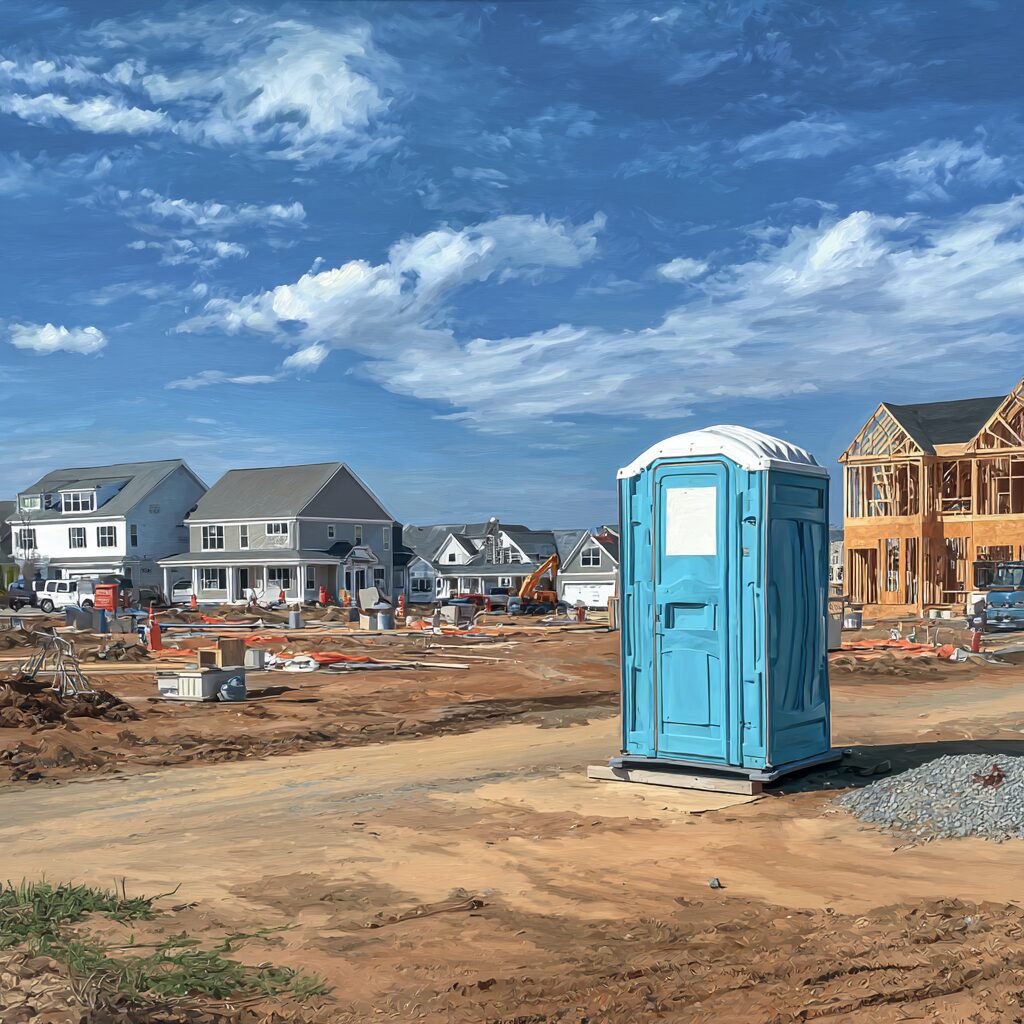
We asked our Prime Dumpster Pros for their insights on managing portable restroom logistics when roofing contractors work on construction sites.
“Roofing crews lose serious productivity when they have to climb down multiple stories every time nature calls, and expecting workers to descend ladders or scaffolding three or four times daily creates fall hazards. For projects above three stories, consider adding crane-liftable units on upper levels once structural work allows safe placement. Ground-level facilities work fine for single and two-story buildings, but taller projects need upper-level access to keep roofers productive and safe.”
“Roofing material deliveries involve massive crane operations and material staging zones that take up significant ground space around building perimeters. Position porta potties at least 30 feet away from crane swing radius and material hoist drop zones to prevent units from blocking equipment operations. Roofers stage bundles of shingles, rolls of underlayment and stacks of plywood exactly where cranes can reach them efficiently, so those areas are off limits for porta potty placement.”
“Absolutely, and ideally before roofing materials arrive on-site. Roofing crews need clear perimeter access for material staging, ladder placement and debris chutes that send old shingles into dumpsters below. If porta potties block these zones, roofers waste time maneuvering around them or asking for emergency relocations mid-project. Review your roofing contractor’s staging plan during pre-construction meetings, then position units away from their planned work perimeter before the first material delivery.”
“Roofing happens during the hottest months when crews are working in full sun on black shingles that amplify heat, which means workers consume more water and use facilities more frequently than other trades. Combine that with summer heat making porta potties hotter and smellier, and you need to double your service frequency from weekly to twice weekly minimum during roofing phases. Roofers already deal with brutal conditions, so providing well-maintained, frequently serviced facilities shows respect for crews working the toughest job on your site.”
Successfully coordinating porta potties with trade contractors requires proactive planning rather than reactive problem-solving when conflicts surface mid-project. Simple coordination steps prevent the costly delays and repositioning fees that result when porta potties block critical work areas.
Prime Dumpster’s team understands construction sequencing and trade contractor needs, providing flexible services and proactive communication that keeps sanitation logistics working alongside specialized trades. Contact us for expert guidance on coordinating porta potties with trade contractors throughout your construction timeline.
If you are looking for Professional’s Guide to Porta Potty Integration for Construction Sites, Click Here


