Mon - Sat 7:00 am to 7:00 pm


Mon - Sat 7:00 am to 7:00 pm

Strategic porta potty placement by site layout transforms ordinary construction sites, festivals, and sporting events into smoothly functioning operations where crews and attendees stay productive and comfortable.
Behind every successful project lies a carefully planned sanitation strategy that considers proximity to work zones, ground stability, service vehicle access, and compliance with safety regulations like OSHA’s 200-foot maximum walking distance.
At Prime Dumpster, we’ve created the following guide exploring porta potty placement best practices for diverse environments, from high-rise construction and industrial plants to outdoor festivals and disaster recovery sites.
Proper porta potty placement dramatically improves efficiency, safety, and user satisfaction across various environments and events.
These strategic placement principles play an important role in overall porta potty logistics, helping ensure both safety and comfort for everyone on site.
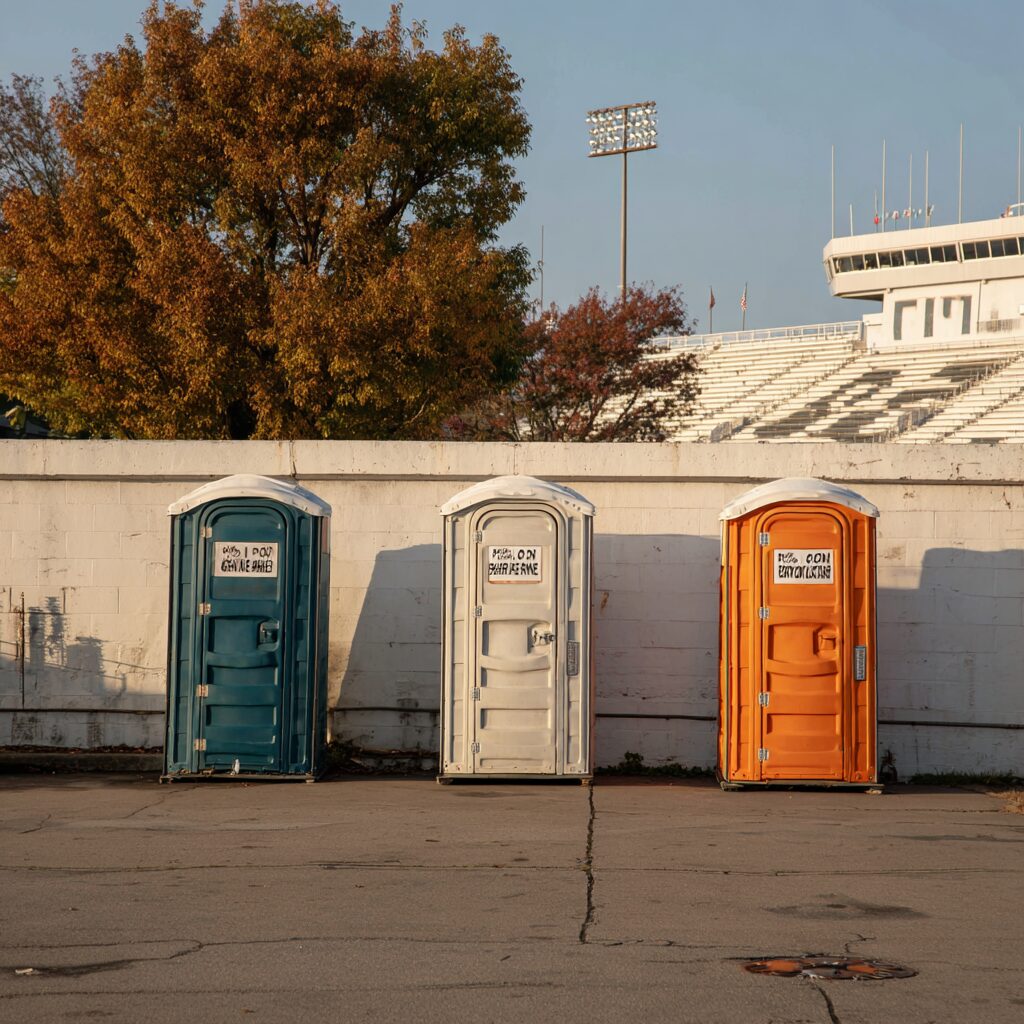
Follow the 10-foot buffer rule near active zones. Units should feel accessible but not intrusive – like a helpful neighbor, not a nosy one. Keep paths clear and surfaces stable. Consider these essentials:
| Factor | Smart Placement | Poor Placement |
| Distance from work zones | 15-20 ft buffer | Adjacent to machinery |
| Emergency access | Clear 360° perimeter | Blocking fire lanes |
| Surface stability | Level gravel/concrete | Muddy inclines |
OSHA doesn’t play games about worker needs. Their 200-foot maximum walk rule exists because desperate dashes lead to accidents. Three non-negotiable musts:
Fines for violations can hit $16,550 per incident. Worse? Crews remember employers who make bathroom breaks feel like wilderness expeditions. Get it right, and you’ll earn loyalty along with compliance.
Choosing the right sanitation solution can feel like picking shoes for a marathon – comfort and functionality matter more than you think. Let’s break down your options to match every worksite need.
Basic models work hard without breaking budgets. These no-frills heroes offer enough room to maneuver without taking up a massive footprint. Perfect for construction crews who prioritize practicality over pampering.
Upgrade to deluxe versions when hygiene tops your list. These models feature:
Event planners love these for weddings or outdoor gatherings where guests expect cleaner experiences.
Federal law requires ADA-compliant units on most job sites – and for good reason. These spacious designs feature:
Place them within a 5-minute walk from work areas.
Prime Dumpster Pro Tip: Use ramps on uneven terrain to maintain compliance. One accessible unit typically serves up to 10 workers with mobility needs.
Picture a skyscraper site versus a suburban housing development – their sanitation needs couldn’t be more different. Tailoring your approach to each project’s unique footprint keeps crews productive and avoids bathroom marathons.
Start by mapping high-activity zones. Track where teams gather for breaks or equipment checks. Position facilities within a 30-second walk of these hotspots. For multi-level projects, install units on every third floor near stairwells or elevators.
| Site Type | Ideal Setup | Mistake to Avoid |
| High-Rise | Crane-lifted units on floors 5, 10, 15 | Ground-level-only placement |
| Suburban | Centralized cluster near material storage | Scattering units randomly |
| Commercial | Perimeter placement with clear signage | Blocking loading docks |
Track workflow changes weekly. When crews shift from foundation work to framing, move sanitation stations accordingly. Temporary sites need mobile solutions – think trailers with hitch systems for easy relocation.
High-rise challenges demand creativity. Use exterior-mounted units accessible via construction elevators. One New York high-rise project cut break times 18% by placing facilities on alternating floors with color-coded signs.
Remember: Workers take breaks every 90-120 minutes. Position facilities along natural pathways to break areas. It’s not just convenience – it’s about outsmarting the clock.
Ever watched a construction crew play hide-and-seek with restrooms? Spoiler: Nobody wins. Smart sanitation positioning keeps hammers swinging and productivity soaring. Let’s transform your job site from bathroom scavenger hunt to well-oiled operation.
OSHA regulations aren’t suggestions – it’s your blueprint for efficiency. Position facilities within a brisk 30-second walk of high-activity zones. Follow this golden triad:
| Priority | Smart Move | Mistake |
| Worker Access | 150 ft from active crews | 300+ ft treks |
| Machinery Buffer | 25 ft clearance | Next to crane paths |
| Lighting | Solar-powered units | Shadowy corners |
Dirty units don’t just stink – they become safety hazards. Map service routes like you’re planning a military convoy. Key factors for hassle-free upkeep:
Create 14-foot-wide access lanes for pump trucks. Time servicing during low-activity periods – nobody wants honey wagons rolling through lunch breaks. Pro tip: Place units near perimeter gates for easy servicing without disrupting workflows.
Industrial plants operate like high-stakes chessboards – every move must balance productivity with danger zones. Positioning sanitation facilities here requires precision to avoid clashes with machinery and chemical processes.
Coordination with plant safety officers isn’t optional – it’s survival. Follow this blueprint for smart setups:
| Challenge | Smart Solution | Risk Zone |
| Rotating equipment | 15 ft clearance from moving parts | Near conveyor belts |
| Chemical storage | Upwind placement | Leakage pathways |
| High-voltage areas | Insulated access paths | Transformer proximity |
Shift changes demand military-style planning. Try these crowd-control tactics:
Harsh environments chew through standard units. Double servicing frequency in these conditions:

What separates a smooth game day from restroom riots? Stadium success hinges on smart sanitation planning that keeps crowds moving and tempers cool. Get this wrong, and you’ll have lines longer than a seventh-inning stretch.
Think like a traffic cop directing rush hour. Position facilities where people naturally gather but won’t create logjams. Follow this playbook:
| Hotspot | Smart Move | Fumble |
| Concessions | 150 ft downwind | Adjacent to food lines |
| Grandstands | Every 3 sections | End zone only |
| Entry Gates | Flanking both sides | Single central cluster |
Accessibility isn’t optional – it’s good sportsmanship. Ensure 25% of units meet ADA standards with:
Halftime surges demand military precision. Try these crowd hacks:
Outdoor festivals thrive on flow. Position portable restrooms where they’re convenient but never chaotic. Follow this rhythm: cluster units near high-traffic zones but keep them 50 feet downwind from food vendors. Modern portable toilet designs help contain odors, but wind direction matters more than air fresheners.
Lines shouldn’t outlast the headliner’s set. Try these crowd-control moves:
| Hotspot | Smart Setup | Festival Fail |
| Main Stage | Restroom clusters every 200 ft | Single line snake pit |
| Food Court | Upwind locations | Downwind stink zone |
| Entry Gates | 20% ADA units at front | Hidden accessible options |
Multi-day events need military-grade cleaning plans. Triple your service schedule – Friday morning freshness won’t survive Saturday night. Stock units like you’re prepping for a hurricane: extra TP, hand sanitizer stations, and trash bags galore.
Accessibility isn’t just legal – it’s hospitality. Ensure 15% of portable toilet locations meet ADA standards with:
Coordinate with security teams to position restrooms near medical tents and info booths. Bonus: Staff can monitor lines and redirect foot traffic before queues turn into conga lines.
Ever tried finding a restroom during a guitar solo? Not exactly a crowd-pleaser. Smart concert sanitation keeps fans focused on the music, not their bladders. Get it right, and you’ll transform bathroom breaks from buzzkills to background noise.
Place clusters of units near food vendors and exits, but keep them 75 feet from stages to avoid sound interference. Studies show multiple small restroom areas cut wait times by half compared to single massive setups. Use LED-lit pathways and glow-in-the-dark signs for nighttime safety – nobody wants tripping hazards during encores.
Strategic porta potty placement by site layout gives project managers and event coordinators a powerful tool to enhance operations while maintaining compliance with safety regulations and accessibility requirements.
Contact our team to discover how our comprehensive porta potty services can transform your sanitation strategy from an afterthought into a competitive advantage that keeps your project or event operating at peak performance.
If you are looking for What’s Inside a Porta Potty?, Click Here


