Mon - Sat 7:00 am to 7:00 pm


Mon - Sat 7:00 am to 7:00 pm
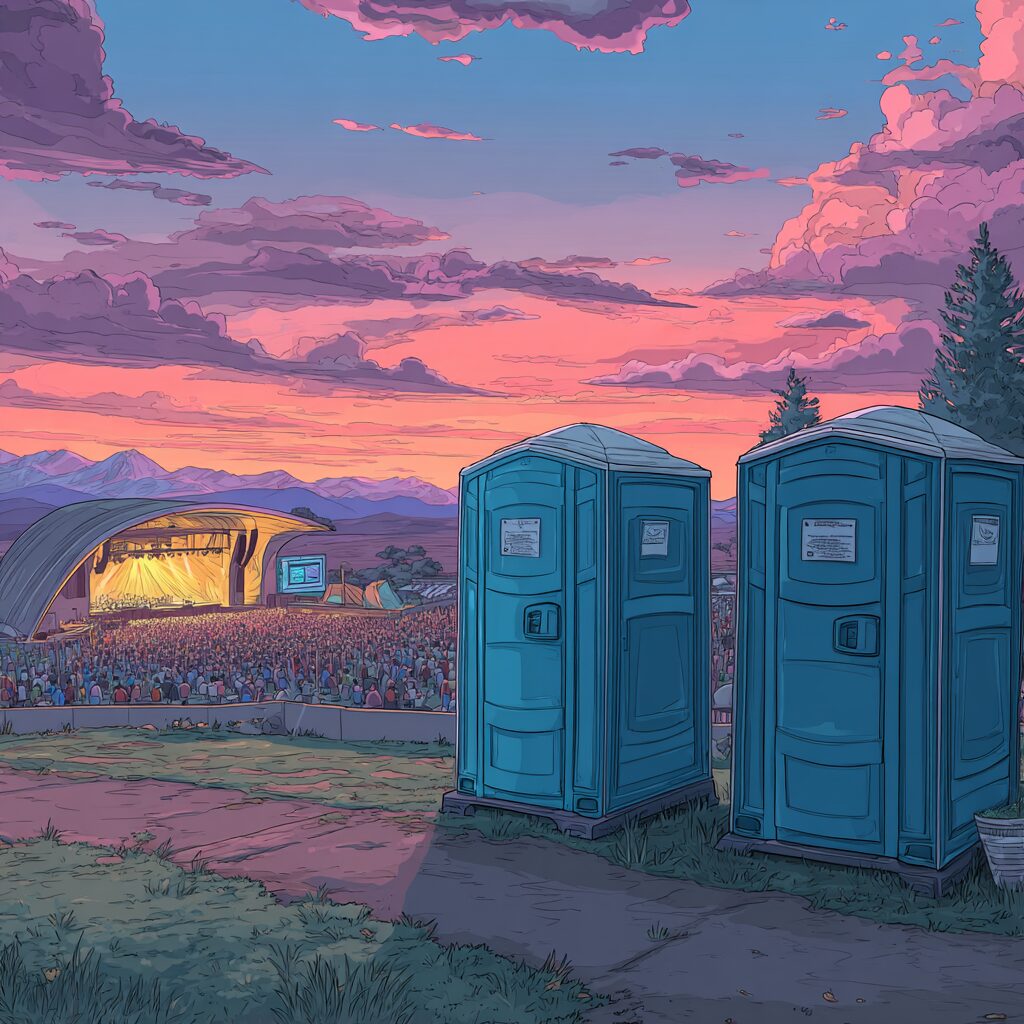
The roar of the crowd, the pulse of live music, the energy of thousands gathered for an unforgettable experience—but none of that magic happens without solid logistical planning behind the scenes. When searching for porta potty rentals for festivals and concerts near me, event organizers face the critical challenge of keeping massive crowds comfortable while maintaining smooth operations throughout long performance days.
Large-scale events demand specialized expertise that balances guest comfort with operational efficiency. Success requires understanding crowd flow patterns, managing peak usage periods, coordinating service schedules, and ensuring facilities remain clean and accessible from opening acts to final encores.
Searching for porta potty rentals for festivals and concerts near me? At Prime Dumpster, we’ve coordinated portable sanitation for festivals and concerts nationwide, learning firsthand how proper restroom logistics can make the difference between a legendary event and a logistical nightmare.
We asked the experts on our team for help answering some of the most common questions we hear from event organizers planning large-scale gatherings. Here’s some advice from our Prime Dumpster Pros:
“For a 5,000-person festival, you’ll typically need around 100-125 porta potties total, but the exact number depends on event length and alcohol service. We usually recommend one unit per 40-50 attendees for day events, but bump that up to one per 30-35 guests for all-day festivals with beer and food vendors. Always include 10-15% ADA-compliant units distributed throughout the venue.”
“Standard units are your workhorses for general admission areas—basic but clean facilities that handle high-volume turnover efficiently. Luxury trailers are game-changers for VIP areas and backstage, offering multiple stalls, climate control, running water, and upscale finishes that match premium ticket experiences. The investment pays off in guest satisfaction and helps justify higher-tier pricing.”
“Multi-day festivals require daily servicing at minimum, with high-traffic units needing attention twice daily during peak periods. Ideally, you’ll want to schedule pump-outs during set breaks and late-night hours to avoid disrupting performances, plus extra service runs when alcohol sales spike or temperatures soar.”
“Most cities require special event permits that include portable restroom specifications, especially for festivals over 1,000 attendees. You’ll need to show unit counts, placement maps, service schedules, and ADA compliance plans during the approval process. Start permit applications 8-12 weeks early since some jurisdictions have lengthy review periods for large gatherings.”
“Distribute porta potty clusters near concession stands, main entrances, and family areas rather than creating one massive restroom bank. Keep units 100-200 feet from food vendors but close enough to high-traffic zones that fans don’t miss crucial plays waiting in line. Always ensure clear sight lines for security and emergency access between restroom areas and the main venue.”
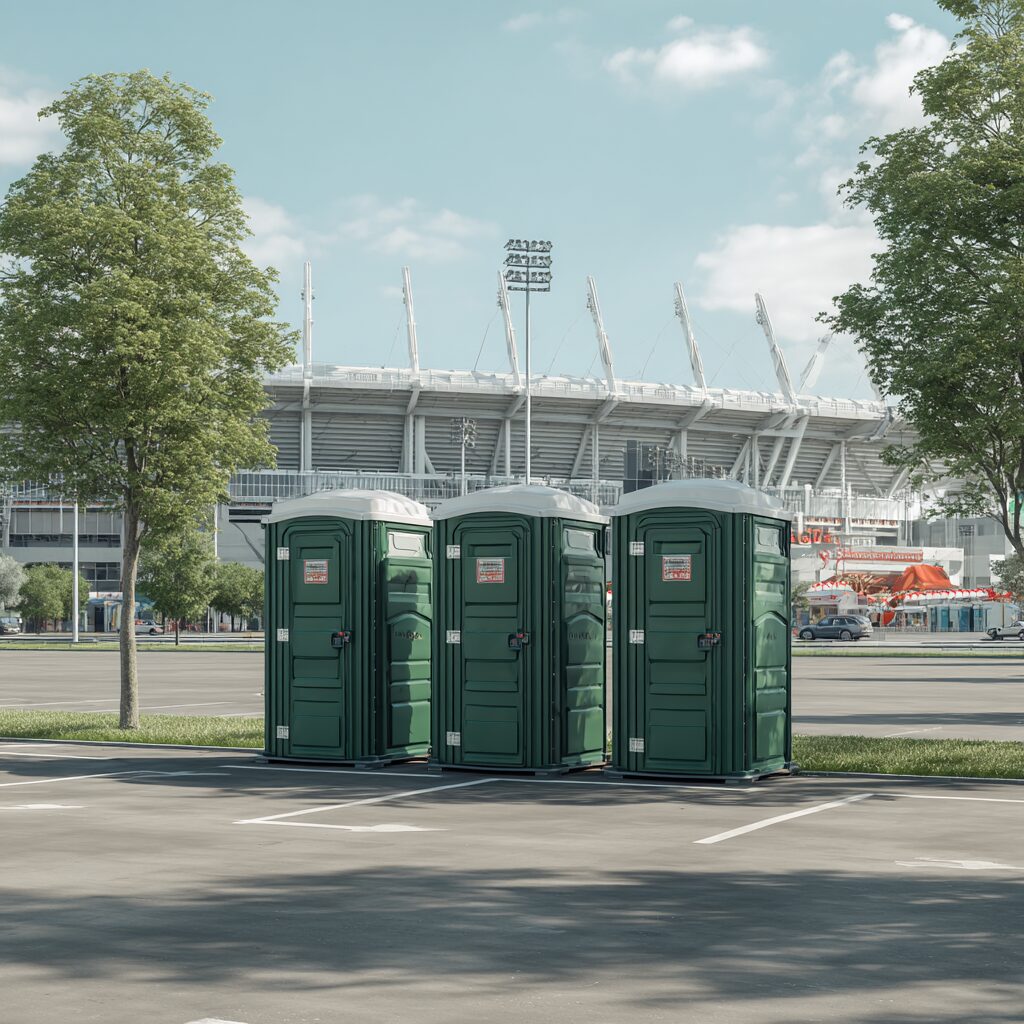
Zone the site. Put restrooms near gates, stages, concessions and family areas so guests do not hunt. Include ADA-compliant options in every cluster so access is fair across the grounds.
| Unit type | Best use | Features | Placement |
| Standard unit | High-volume general admission | Simple toilet, quick turnover | Near general entrances and concessions |
| Deluxe unit | Food areas, VIP lanes | Sinks, better ventilation | Close to stages and catering |
| ADA-accessible | Guests with mobility needs | Handrails, wider door, ramp | Every cluster across site |
| Shower trailers | Multi-day music festivals | Showers, changing rooms | Backstage or camping areas |
Build a quick communications channel so staff can flag low supplies or a malfunctioning toilet fast. We recommend working with experienced united site services teams to keep service smooth and unobtrusive.
A clear unit mix saves time and makes guests happy. Start by matching your options to crowd size, site layout and comfort goals.
Use standard portable toilets as workhorses where foot traffic is heavy. They maximize capacity and spread easily across large fields or parking lots.
Place these near food courts and tasting areas. In-unit sinks give guests a quick way to wash hands without leaving the zone.
Foot-pump flush models cut splash and odors. Pick them for VIP lounges, family viewing areas or artist compounds where comfort matters.
Accessible units are roomy, but ADA-compliant restrooms meet specific specs: ramp-free entry, turning radius and handrails. Use ADA models to meet code and ensure equal access.
Trailers and luxury restroom trailers offer multiple stalls, real sinks, lighting and climate control. They fit VIP, sponsorship suites and backstage. For dependable service, coordinate with united site services or your local site services team to balance cost, comfort and sanitation.
Good logistics make restrooms invisible until guests need them. Plan so people find facilities without crowding walkways or blocking sightlines at stages and concessions.
Place small clusters close to activity hubs but offset from main flow. Distributed units reduce queues and shorten walking time.
Reserve dedicated lanes for pump-outs and restocking. Use level pads or gravel so trucks can park safely and work without cutting through crowds.
Put hand washing stations at food exits, VIP entries and family zones. Guests will use them when they sit ease of access.
Light approaches and queue lines with dusk-to-dawn or motion lighting. Use fencing to form neat serpentine lines that preserve ADA access.
Route waste behind the scenes. Position roll-off dumpsters where loaders can reach them without crossing guest areas. Keep units upwind of picnic lawns and quiet activations.
| Logistic element | Best practice | Why it matters |
| Cluster size | Multiple small groups | Reduces bottlenecks |
| Service lanes | Dedicated, level access | Keeps trucks off emergency paths |
| Waste routing | Back-of-house corridors | Preserves guest sightlines |
Clean facilities and smart service keep guests comfortable all day long. A clear hygiene plan reduces complaints and keeps your team focused on the show, not surprises.
Create a servicing plan that covers preopen checks, midday restocks, and a final sweep before headliners. Label which crew member refills tissue, soap, sanitizer, and trash bins at each cluster.
Schedule extra pump-outs during alcohol-heavy periods and hot afternoons to avoid overflows.
Place hand washing stations at food exits and choke points. Use foot-pump sinks and sanitizer stands so guests can clean up without touching surfaces.
Size water and holding tanks to cover your full operating day. That prevents sinks and flushable units from running dry during peak hours.
Reduce slips with non-slip mats, cord covers, and good lighting at entries and queue lines. Train staff to spot hazards and report spills fast.
Keep lines orderly with stanchions or staff marshals. Never let queues block ADA paths or emergency exits.
Space units slightly apart in heat to boost airflow. Choose ventilated models and plan frequent deodorizing treatments for beer-heavy nights.
Flushable models and extra ventilation make a noticeable difference in guest experience.
| Action | Frequency | Benefit | Note |
| Preopen check | Daily (before gates) | Catch leaks, stock supplies | Assign team member per cluster |
| Midday restock | Every 3-4 hours | Keep supplies full during peaks | Label refiller and time |
| Pump-outs | As needed / scheduled | Prevents overflow and odors | Increase frequency in heat |
| Final sweep | Before headliners | Ensure clean appearance | Check locks, lights, and mats |
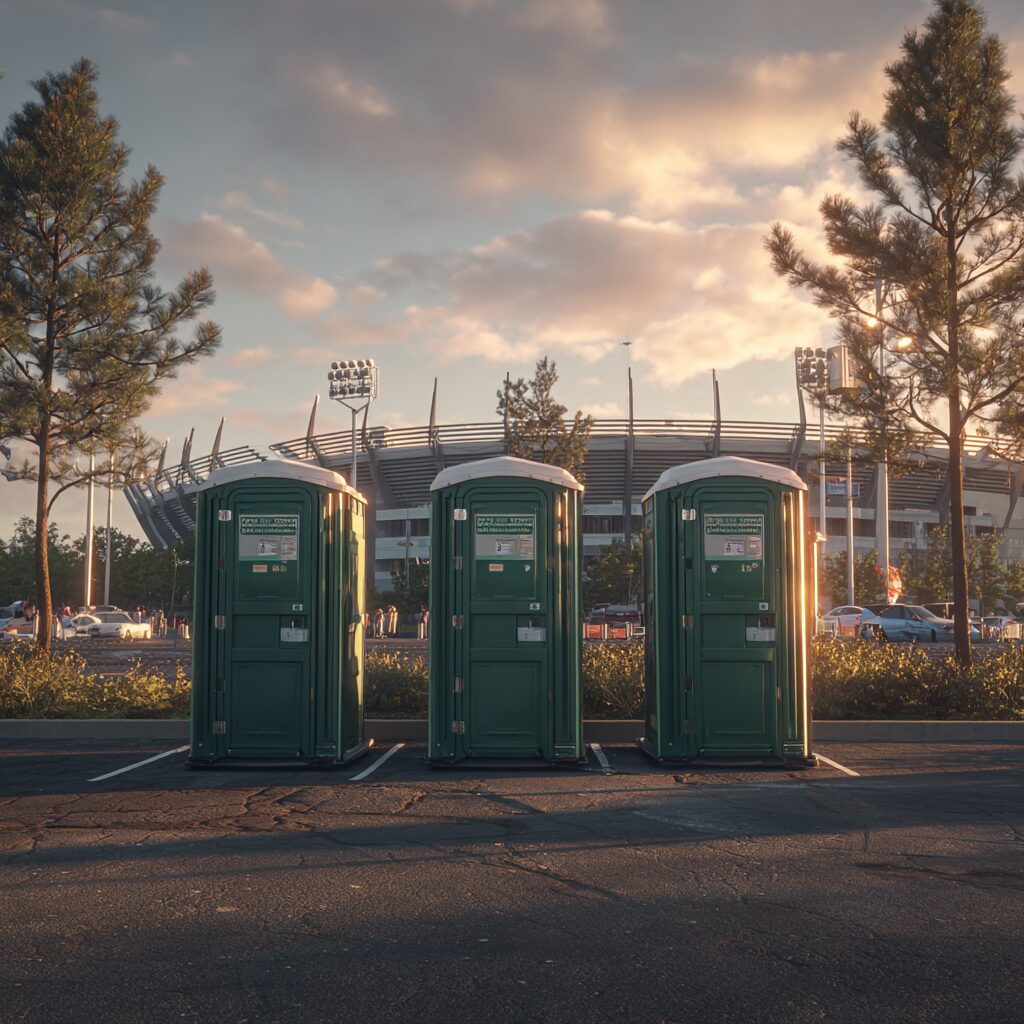
Get the right mix of units and service windows to keep guests happy from opening act to last encore. Start by matching unit types to event length and crowd behavior. Short sets need many quick-turn units. All-day music festivals or camping require more flushable options and trailers offer comforts that last through night shifts.
If alcohol is served, increase upgraded units in premium areas and raise service frequency. Add flushable or sink-equipped options in family zones and include baby-changing stations.
Disperse ADA-compliant units across accessible routes, not clustered. Check local permits for setbacks, pump-out access and greywater rules. Document counts, locations and service windows for inspectors before you stage equipment.
| Need | Recommended mix | Service cadence | Why it matters |
| Short, high-turnover shows | Mostly standard units with 10% upgraded | Frequent midday checks | Fast throughput, low downtime |
| All-day music festivals | Standard + 20-30% flushable/trailers offer | Scheduled pump-outs and night service | Comfort for long stays, odor control |
| Family-friendly zones | Flushable units, sinks, baby stations | Restock every 3-4 hours | Hygiene and convenience |
| Remote/backstage | Restroom trailers offer self-contained packs | Pre-planned water and waste windows | Reliable service without site utilities |
Smooth on-site operations depend on fast eyes, quick feet, and clear radios. A small operations center should track supplies, service runs, and urgent tickets in real time.
Assign an on-call team and a hotline so staff report low supplies, stuck doors, tipped units, or overflow immediately. Stage spare units nearby for quick swaps when a restroom must be taken offline.
Use live checklists and scheduled runs during set breaks and intermissions when lines peak. Rotate crew through high-traffic clusters to wipe touchpoints and note supply needs between service runs.
Communicate supply status to control so the nearest crew responds, not the farthest. Keep hand soap, paper, and sanitizer in labeled kits for fast restocks.
If a guest drops a phone, wallet, or ring, close the unit and mark it out of service. Call your sanitation crew. Do not let anyone reach into a tank.
Only trained staff with PPE should retrieve items. Document the chain of custody when returning valuables to the guest.
Open shower trailers and family rooms early for campers and staff. Schedule water and waste windows and note them in the operations log so trailers stay usable all day.
| Playbook item | Action | When | Benefit |
| On-call response | Hotline → crew dispatch | Immediate | Faster fixes, less downtime |
| Restock runs | Live checklist, labeled kits | Set breaks & midpoints | Shorter lines, steady supplies |
| Lost-item retrieval | Close unit, PPE retrieval, log | Report then retrieve | Guest trust, safety compliance |
| Multi-day support | Open trailers early; schedule water | Daily & overnight | Comfort for campers and crew |
Start by mapping crowd flow, schedule, and the food-and-drink footprint. Then size your porta potty rentals and portable restrooms to match real movement on the ground.
Combine standard units with upgraded options like in-unit sinks, flushable models, and restroom trailers where comfort matters. Place hand washing stations and sanitizer where guests actually use them.
Draw service routes that keep crews out of guest paths, protect turf, and speed pump-outs. Add lighting, fencing, and roll-off dumpsters to manage lines, safety, and waste during loadout.
Build a short operations playbook covering restocking, on-call fixes, lost-item rules, and teardown. Do a quick debrief after the event.
When portable sanitation runs smoothly, the audience focuses on the show — not the restroom.
Searching for porta potty rentals for festivals and concerts near me? Successful festivals and concerts are remembered for incredible performances and seamless experiences—not bathroom lines or facility failures.
Contact our team to discover how our comprehensive approach to porta potty rentals for festivals and concerts near me can help you create unforgettable events while keeping operations running smoothly behind the scenes.
If you are looking for Porta Potty Rentals for Weddings Near Me, Click Here


