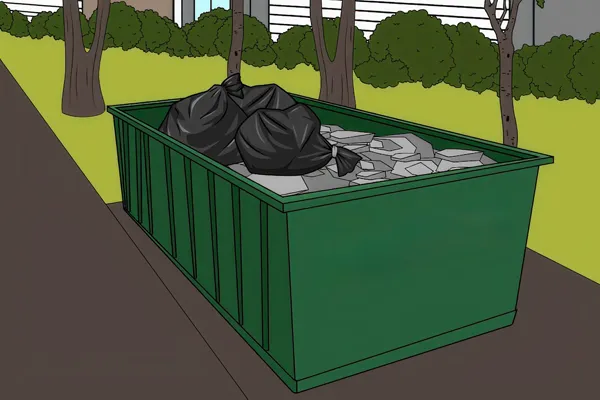
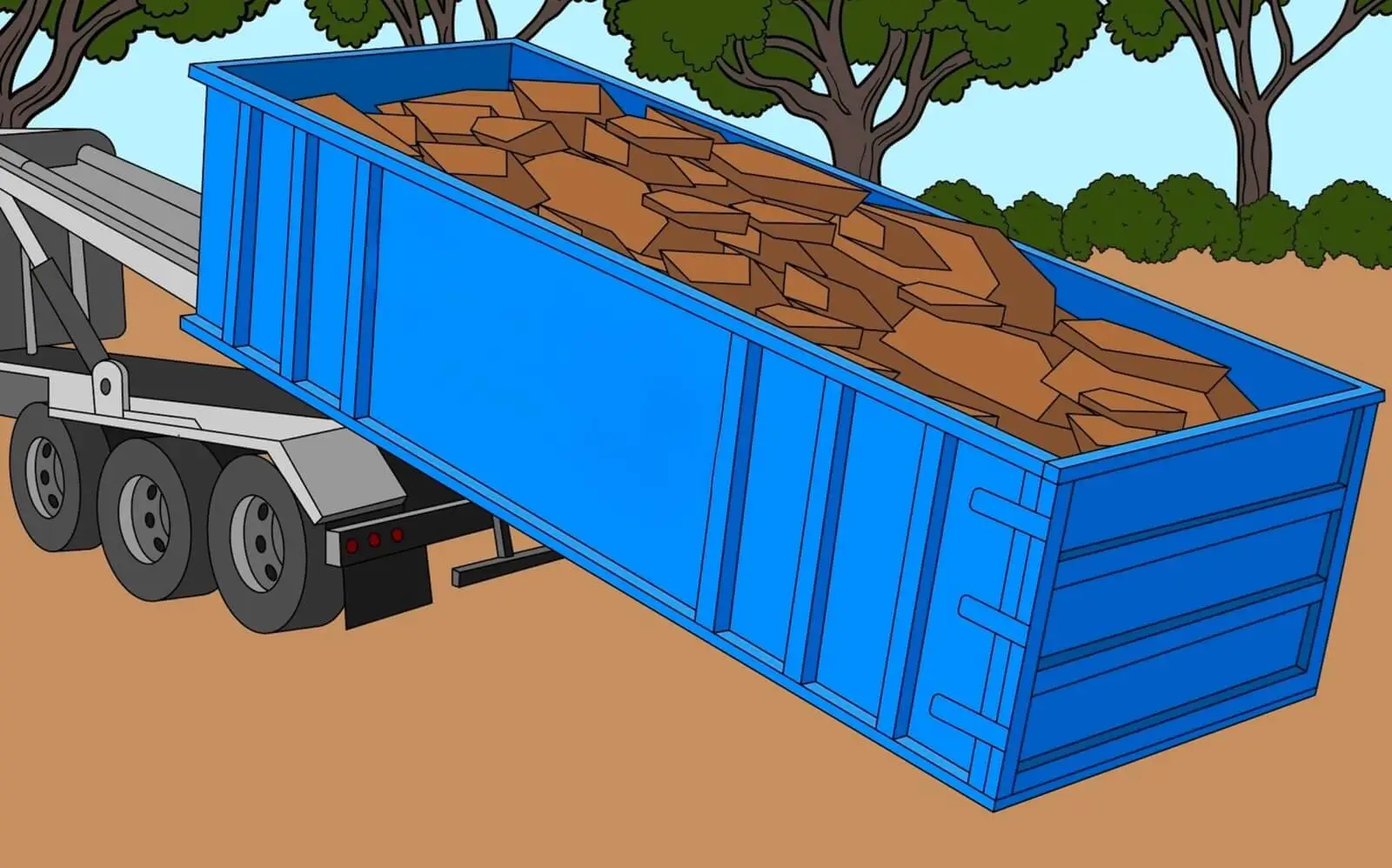
Ordinary household and building debris is welcome. The hard limits come from the state and from the facility that ends up with your load.
The West Virginia Department of Environmental Protection is direct about it: a landfill may not accept free liquids, hazardous waste, undewatered sewage sludge, pesticide containers that have not been rinsed and crushed, drums that are not empty and crushed, or covered electronic devices. The state counts a television, computer or video display with a screen bigger than four inches as a covered device, so a single old monitor in the load is a problem. Tires are handled under a separate state program and have to be kept out too.
Construction and demolition sites face a longer list, because the facilities that take clean rubble will not take putrescible or household waste, liquid paint of any kind, lacquers, solvents, adhesives, cements, sealants, pesticides, aerosols, brake fluid, motor oil and filters, other automotive fluids or fuels, railroad ties, pressure treated wood, engineered wood, piping, wiring, appliances and other metal waste, batteries, fluorescent tubes, ballasts and transformers, or carpet and synthetic flooring.
Paint, fuel, solvents and asbestos stay out of any standard container, everywhere. If your job has asbestos in it, that is licensed removal work and a separate disposal route.
Holding something you aren't sure about? Check with your account manager before it goes in.