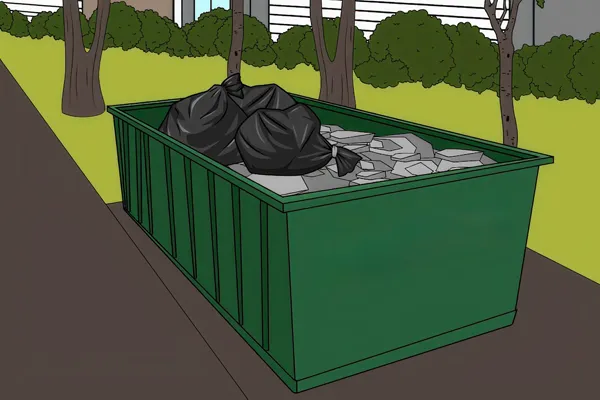
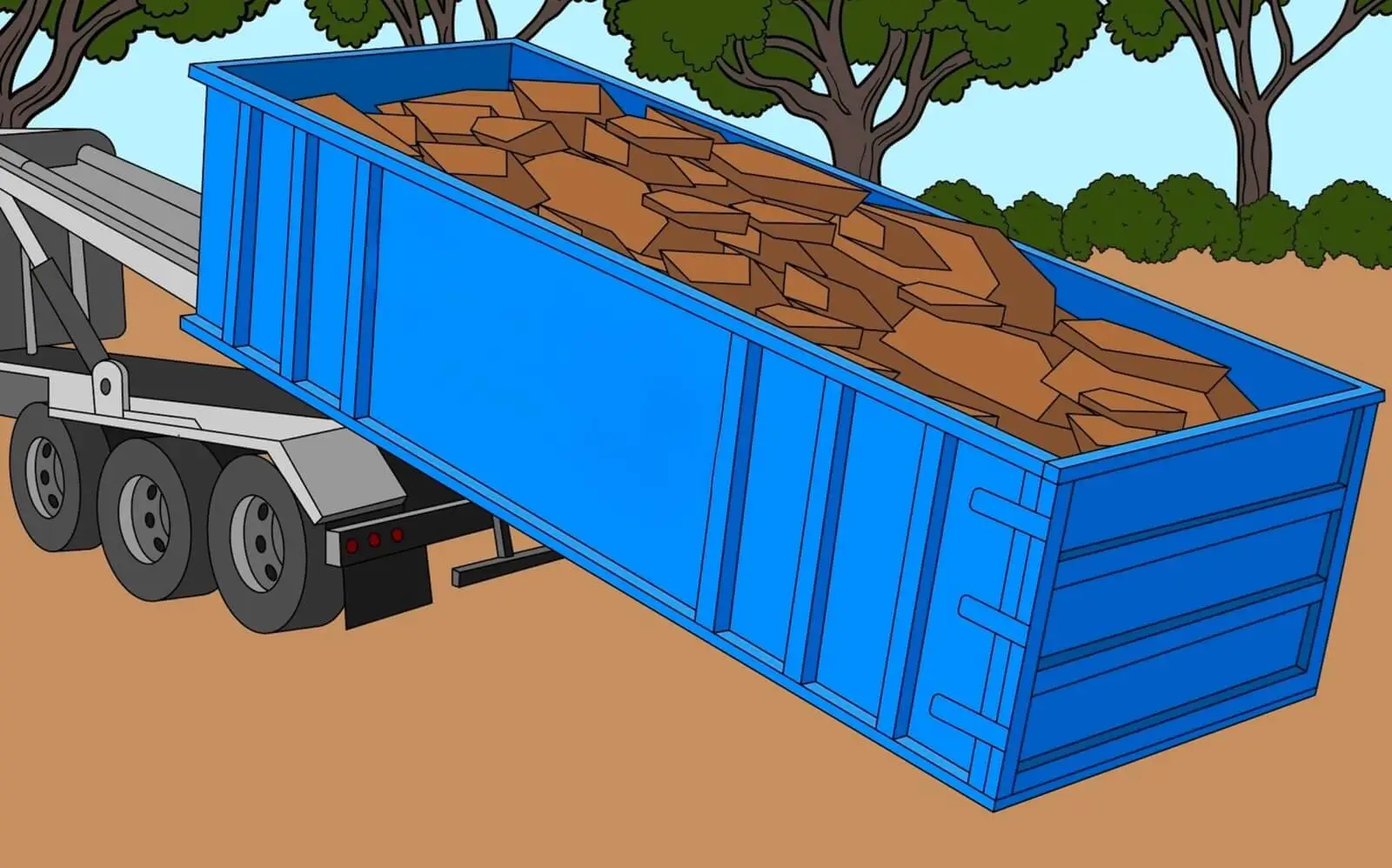
Most of what a remodel or cleanout produces is fine to load. The limits come from West Virginia's solid waste rules and from the permit each receiving site holds.
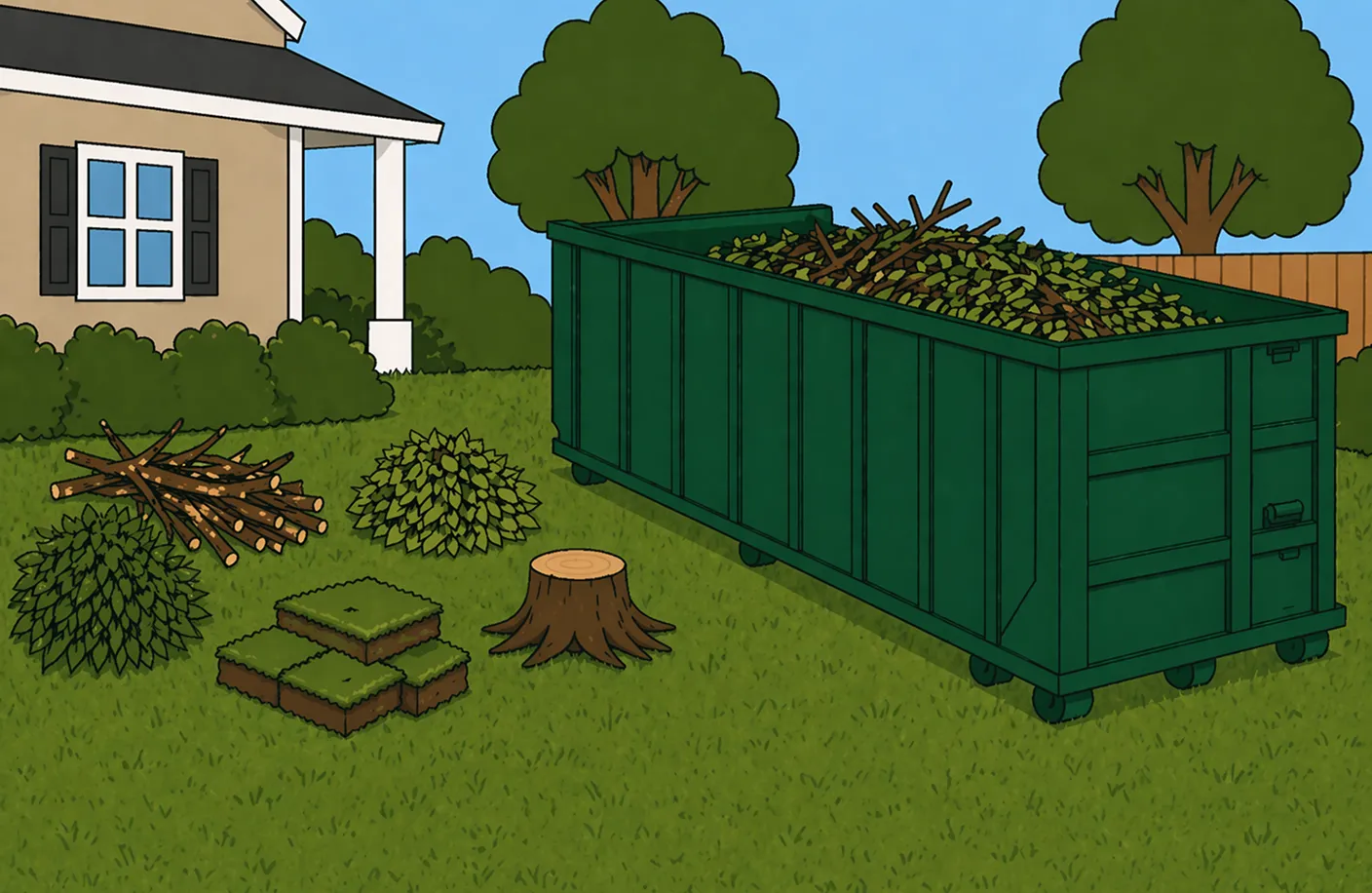
The state's own definition of construction and demolition waste is narrower than people expect. It covers wood, plaster, brick, block, concrete, and other masonry, but it leaves out asbestos material, household furnishings, burnt debris, anything with lead-based paint, pressure-treated wood, contaminated waste, yard waste, and scrap tires. Those need their own route, and a renovation container is not it.
The Department of Environmental Protection permits every disposal site in the state and sets what each one may accept, so the gate has the last word on a questionable load. On top of that, the usual items stay out of any container: liquids, paint, solvents, fuel, motor oil, batteries, and pressurized cylinders.
Tires have a good local option. The state runs free tire collection events in every county for residents with West Virginia identification, and Monongalia County holds one most months at the city garage on M-Tec Drive.
Not sure about something? Ask your account manager before it goes in the container.