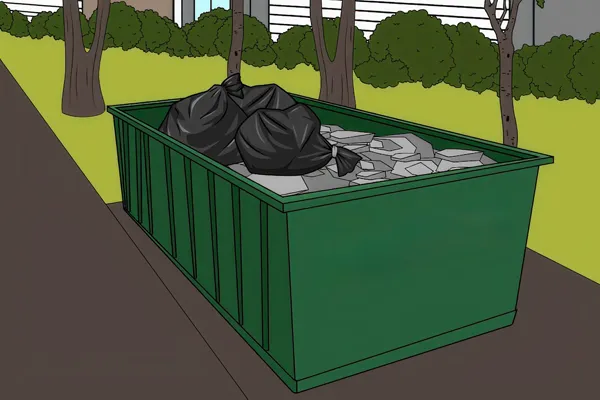
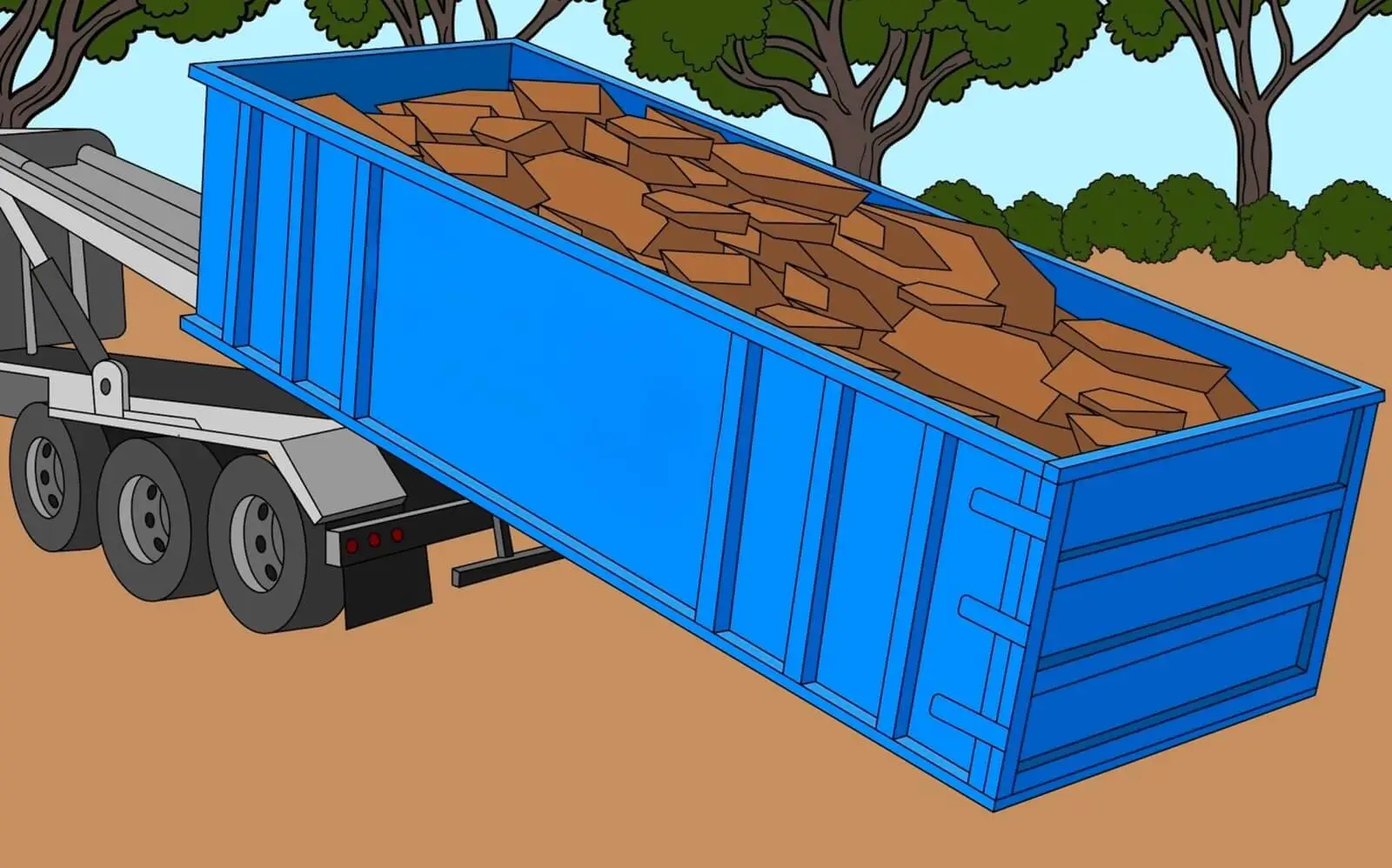
Nearly all remodel and cleanout debris belongs in a container. The exceptions come from Oklahoma rules and from what the landfill turns away at the entrance.
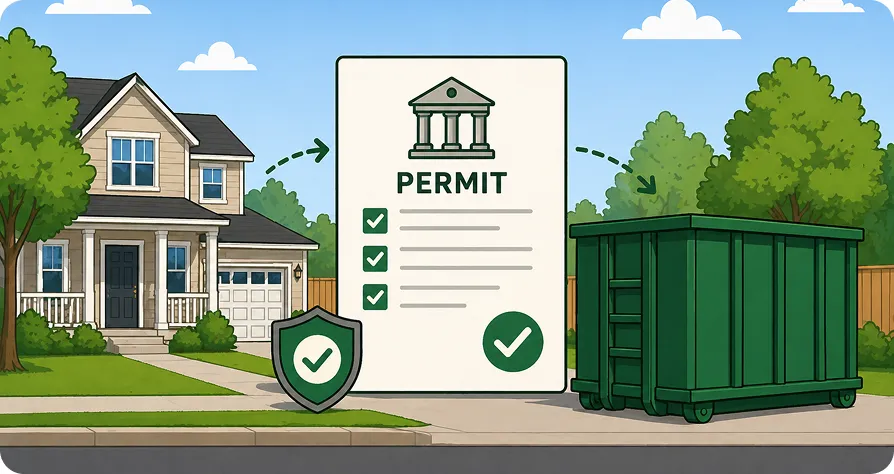
Oklahoma requires every load of solid waste to reach a facility permitted by the state environmental agency, and hazardous waste, radioactive waste, and material containing PCBs are barred from those facilities outright. Tires have their own route as well, funded by the recycling fee collected when tires are sold, because landfills won't bury them.
Used motor oil is regulated separately. Oil headed for disposal rather than recycling has to be tested first, and anything hazardous goes to a hazardous waste facility. Recycling is simpler, and many collectors accept hot-drained oil filters at the same time. Lead-acid batteries go back to a retailer that sells them.
The Lawton landfill lists what it won't take: hazardous waste, oils, solvents, fuels, automotive fluids, medical waste, explosives, and asbestos. Refrigerators and air conditioners need their refrigerant removed and tagged by a licensed technician before disposal.
It's worth noting what the City's curbside crews leave behind too, since that list reads like a remodel: bricks, concrete, dirt, rocks, sheetrock, paints, solvents, glass, and windows. A container is the straightforward answer for all of it.
Holding something you can't classify? Put it to your account manager before it lands in the container.